Translate

Guide to Patagonia's Monsters & Mysterious beings

I have written a book on this intriguing subject which has just been published.
In this blog I will post excerpts and other interesting texts on this fascinating subject.

Austin Whittall


Showing posts with label erectus. Show all posts

Wednesday, October 7, 2026

Drimolen Cave in South Africa and the Eurasian Homo erectus


A paper published last week, on Sept. 30th, by archaeologists from La Trobe University, (Martin, J. M., Leece, A. B., Baker, S., Herries, A. I. R., & Strait, D. S. (2026). New hominin cranial and mandibular remains from Drimolen Main Quarry, South Africa. Annals of Human Biology, 53(1). https://doi.org/10.1080/03014460.2026.2725046) described the remains of bones discovered at the Drimolen site. They reached some interesting conclusions.


Drimolen Site


This site is located in a hotspot (there are other similar aged sites nearby —Sterkfontein, Swartkrans, Kromdraai, Coopers), see Google Map. The area is a UNESCO World Heritage site known as "Cradle of Humankind". The place, a quarry, was discovered in 1992, by chance by an amateur archaeologist named André Keyser in 1992. Diggings at the quarry found teeth, jaws, fragments of crania of different hominins, including unidentified Homo species, and Paranthropus robustus. The age of the remains spans a period from 1.5 to 2 million years ago.


The site was an old cave, that was infilled with sediments over the years, and into which animals and hominins fell, and were preserved in the dirt, that became a rock known as breccia (a conglomerate of sharp pebbles cemented together by fine graind sands). This setting, plus the fact that it was a lime quarry, makes me wonder if the old dates assigned to the specimens are accurate. See Herries et al., 2020 who describe the sediments, the now exposed remains of the cave, erosion, quarry alterations, etc. Which tend to downplay disturbed sedimentation, but confirm my suspicions that the site's dating could be skewed to antiquity to favor the OOA theory.


The remains have been described in different papers over the years, and this one is the most recent publication, that describes and identifies the species to which several fossils belong.


The authors identify one of the fossils, named DNH 127, as not belonging to the Paranthropus or the Australopiths. It is assigned to the erectus genus.


It was found in a block of rock that may have been part of a pinnacle (DNH 7) which had been dated (this shows that the dating of the remains is tentative, some fossils were found in situ, in the beds of sediments, others in loose soil. After all, this was a quarry and has disturbed rock beds).


They give it the same age given to the other specimens found in the DNH 7 bed. There was an erectus in the site, DNH 134, so scholars expected to find more. This paper assigns the DNH 127 remains to the Homo erectus group, and date it to ~1.98 million years ago.


Link with Dmanisi


Interestingly, they note that "Heuristically, the morphology preserved by DNH 127 most closely resembles that of D2700 from Dmanisi. Based on this mosaic of traits, we tentatively assign DNH 127 to Homo erectus sensu lato." This is revealing, Dmanisi in Georgia, is in the Caucasus, 9,200 km (5,700 mi) away, and it is the site with the oldest crania of Homo erectus in Eurasia. Their age is slightly younger than the age given to the Drimolen Cave specimen (at 1.8 million years old). But, since it was dated based on a conjectural belonging to a given pinnacle, it may be possible that the date is not precise. If so, the Dmanisi remains could be older, or possibly there are older remains yet to be discovered in Georgia. In this case, we could imagine a migration into Africa, from Eurasia, that reached South Africa 1.98 million years ago. The vanguard of these migrants met and coexisted with Paranthropus in this area.


By the way it is interesting how Herries et al., 2020 stress that the Drimolen erectus is older than Dmanisi. Like they need to reinforce the OOA and African origin of Homo genus: "At ~2.04 Ma ago (minimum age 1.95 Ma), DNH 134 is the most complete and oldest early Pleistocene Homo neurocranium in South Africa. DNH 134 is at least 100,000 to 150,000 years older than H. erectus s.l. specimens from Dmanisi... As such, DNH 134 represents the oldest fossil with affinities to H. erectus in the world. Despite this, we do not assert that the species necessarily evolved first in southern Africa, especially given major geological biases in hominin finds across Africa. However, the dating of the DNH 134 cranium to >1.95 Ma ago substantially weakens the hypothesis that H. erectus sensu lato evolved outside of Africa."


Other unclassified hominins


The paper also mentions that specimens SK 847 and StW 53 have not been classified yet, which "leaves open the possibility that more than one species of Homo may have been present on the landscape in southern Africa ∼2.0 Ma" It states that dental traits have led other authors to assign them to "Homo sp. indet. [but], there is not yet unequivocal evidence to suggest that more than one species of Homo is present within the DMQ assemblage" If so, there would be three or more species there (the other two being erectus and Paranthropus).


A 10 to 1 ratio of Paranthropus to erectus


The unusual ratio of bones between primitive Paranthropus and more evolved Homo erectus.


Although the paper itself does not mention this, it is noted in the University's media release (titled Fossils confirm human ancestors first appearance). In it, one of the coauthors of the paper is quoted as follows regarding Paranthropus and erectus (highlight is mine):


"... “These two human species shared the same landscape and are both preserved in Drimolen cave. While we know that Homo erectus and the lineage leading to us was ultimately the successful one, 2 million years ago P. robustus outnumbered Homo erectus at Drimolen by more than 10 to one. During this time period it was our ancestors that looked like the outside long-odds chance to survive,” Dr Martin said."


This remark drew my attention, why would one species outnumber the other ten to one? It seems that Paranthropus was well adapted to this location, its habitat and environment allowed them to proliferate and grow into a large, well established population. Primitive, the Paranthropus living in this area had larger teeth and jaws, forming a distinct species from other members of the group. This specific adapatation show that they were successful, and the dominant primates in this area.


The fewer erectus remains, however, seems to suggest that they were newcomers. They appear suddenly in the fossil record here, with few members and this hints at recent arrival, a migration of a small population (maybe from the northeast, spreading into a new territory).


The Homo group would be far more successful than Paranthropus but 2 million years ago, they were sharing their new home with very well adapted primates who outnumbered them ten to one.


It is likely that they exploited different resources from their habitat, perhaps the erectus were meat-eaters and gatherers, they made stone tools (though none have been reported here at Drimolen). The Paranthropus were apes, similar to chimps, who may have eaten plants, fruit, and tubers.


The Drimiolen quarry site suggests that erectus was a newcomer to South Africa, it does not prove that they were migrants, and it does not prove that they originated there, in South Africa. Their age, barely older than the oldest Eurasian erectus is used to suggest an African origin for erectus. But, it can't disprove an Eurasian origin and migration into Africa.


Further discoveries will clarify the mystery of the origin of erectus.


Patagonian Monsters - Cryptozoology, Myths & legends in Patagonia Copyright 2009-2026 by Austin Whittall © 

Sunday, May 17, 2026

Were erectus curious, intelligent, and sensitive humans?


A recent publication by Barkai, R., and Shalata, M., 2026, describes the finding of Acheulean tools crafted by Homo erectus using stones that contained fossils, holes, and geodes, which made them wonder if these hominins were attracted to them for magical reasons, and ask if they were sensible, intelligent, and mystical beings. (Lower Palaeolithic Tools of Potency: Handaxes Shaped around Fossils and Other Extraordinary Features at Sakhnin Valley, Israel. Tel Aviv, 1–31. https://doi.org/10.1080/03344355.2026.2637187)


The paper's abstract notes that "The handaxes reported here are part of a larger collection of hundreds of tools bearing typical Levantine Lower Palaeolithic Acheulean characteristics. What makes these handaxes particularly noteworthy is that they were shaped around fossil imprints or other geological features embedded in the selected flint nodule.. While thousands of handaxes are documented from Lower Old World Palaeolithic sites, fossil-bearing handaxes are extremely rare and garner special attention. This collection of unique bifaces provides valuable insight into their makers’ technological and aesthetic preferences, worldviews and relationship with stone. We propose that these handaxes served as tools and mediators between humans and the cosmos, conceived as objects of potency enhanced by the primeval fossil imprints and unique geological features within the stone. The richly embellished rocky landscape of Sakhnin Valley, particularly with its abundant geodes, may have encouraged early humans to express their profound and extraordinary relationships with the cosmos via stones."


The authors note that the flint used to make tools was selected by the Homo erectus who lived in this area (500,000 to 200,000 years ago), and they mostly chose flawless stones, however "Only a few handaxes, about one-tenth of those recovered during our survey, exhibit fossil imprints or other geological features. In addition, these features are located at prominent and distinctive spots on the biface, mostly at the centre of one of its faces. It thus appears that the handaxe was shaped around this feature... We therefore assume that flint nodules bearing fossils and geological features attracted the attention of Acheulean knappers and were intentionally collected by humans, who valued these features for one reason or another. Similarly, we suggest that knapping was conducted to position these features prominently, emphasising their visibility when holding or displaying the handaxe." Below are some images of these remarkable tools.


Acheulean tool
Acheulean tool
Acheulean tool
Acheulean tool
Acheulean tools with fossils, geodes or other structures in them. Source

This article suggests that the some aesthetic advances noticed during the Acheulean period, like the use of ochre, and these fossils and geodes deliberately used to make handaxes shows that these ancestral humans were developing and evolving a more advanced cognition. The authors suggest that this change in their intelligence was promoted by a change in their enviornment during this period. After hundreds of millennia of stability, their typical prey, elephants dwindled, and they had to adapt to other megafaunal food sources. Anxiety set in, and they developed a new perspective, where a cosmovision evolved. Rituals, symbolism, and magic developed. Stones had life, they were tools for hunting, and for this reason, shapes and distinctive features would be highly appreciated as they held power, or "mana". Magic could help them hunt better.


The interesting part of this article is that it portrays erectus differently from the usual cold description given by archaeology, which tends to picture them as primitive, brutal, with a limited intellect, thick-skulled, low-foreheaded, semi-human creatures that were static in time: they made the same Acheulean stone tools for 2 million years without developing any new technology. This depiction tends to make us think of them as very dumb creatures. We even doubt if they managed to master the art of fire making or build boats.


When an incised shell was found back in 2014 (see post), reported by a paper published in Nature, that was 430,000 to 540,000-years-old, the only possible crator of the shell engraved with geometric patterns, was the Homo erectus since no other humans lived in that region at that time. This was the first discovery to suggest that symbolic thought, something believed to be unique to modern humans, like us and the Neanderthals, was also shared by our distant and ancient relative, the H. erectus.


I find it relevant because Homo erectus lived for almost 2 million years in Eurasia and Africa, adapting to a changing environment and developing stronger cognitive abilities, while we, the Homo sapiens have only been around for one-seventh of that time (just 300 ky since the first alleged remains of a H. sapiens were discovered in Morocco), and most of that time we weren't as smart as we are now.


As I wrote back in 2014: "A smarter H. erectus is interesting, it means that 500 kya they could have not only engraved mussel shells but also, dealt with the cold Arctic climate and walked across Beringia into the Americas." I still feel the same way. These people were hardy, intelligent, sensitive, and well adapted to their environments, from the cold climate of northern China to the hot tropical jungles of Java, Indonesia. They were survivors.


To be Continued: Homo erectus in Siberia 800 to 400 kya


As we will see in my next posts, there were ancient humans living in Siberia, at sites far north, in the cold regions not far from Beringia, 400 to 800 thousand years ago. Considering the timeline, they were ver probably erectus. These people had the time, the survival abilities, and the intelligence to move east, and may have been able to reach America.


Patagonian Monsters - Cryptozoology, Myths & legends in Patagonia Copyright 2009-2026 by Austin Whittall © 

Saturday, June 15, 2019

Ancestors of Neanderthal and Denisovans admixed with H. erectus


The paper published by Alan R. Rogers, Nathan S. Harris and Alan A. Achenbach (Neanderthal-Denisovan ancestors interbred with a distantly-related hominin June 14, 2019 biorxiv.org) finds evidence to support three human migrations out of Africa, the first one took place 1.9 Million years ago. The second wave happened 700,000 years ago and involved the ancestors of the Nenderthals and Denisovans (which they call "neandersovans". The last wave was that of modern humans. The oldest migration into Eurasia resulted in a population which they call "superarchaic".


They add: "..the large effective size of the superarchaic population hints that it comprised at least two deeply-divided subpopulations, of which one mixed with neandersovans and another with Denisovans."


They mention their molecular clock, which provided a date (95% confidence interval) of 1.9 to 2.5 Million years ago for the split between "superarhcaic" and the other trunk of mankind.


And coment that: "The lower end of this interval hardly differs from the 1.85 mya date of the earliest Eurasian archaeological remains at Dmanisi. It is possible that superarchaics separated from an African population 1.9 mya, expanded into Eurasia, and left those remains at Dmanisi. If so, then superarchaics descend from the earliest human dispersal into Eurasia. On the other hand, some authors prefer a higher mutation rate of 0.5 × 10⁻⁹ per year. Under this clock, the lower end of our confidence interval would be 1.7 mya. Thus, our results are also consistent with the view that superarchaics entered Eurasia after the earliest remains at Dmanisi."


They also find that the molecular clock calibrations used to calculate a Denisovan - Neanderthal split some 381,000 years ago by M. Meyer, et al., (Nature 531, 504, 2016) are too recent. They calculate the date of the split was almost twice that figure: 731,000 years ago.


This older date is in line with the 750 kya that we mention in our post Neanderthal and Denisovans split around 750 Kya (May 11, 2018), citing a paper by Ryan J. Bohlender and Chad D. Huff.


Although the paper does not name them, it is possible that the unknown super-archaic hominin population was in fact Homo erectus; they appeared around 2 million years ago which coincides with the split date between superarchaics and the other hominins calculated by Rogers et al.


This is in line with something we posted back in Dec. 2013 (Denisovans interbred with Homo Erectus), when we commented on a paper by Prüfer et al., that hinted at interbreeding between Denisovans and H. erectus.


Mendez, F. L., Watkins, J. C., Hammer, M. F., 2012. Global genetic variation at OAS1 provides evidence of archaic admixture in Melanesian populations. Molecular Biology and Evolution 29 (6),1513–1520.) also suggested an ancient admixture event between Denisovans and H. erectus: "These observations present the intriguing possibility that this deeply diverged region of OAS1 may have introgressed into the common ancestor of Denisova and Melanesians via admixture with an unsampled hominin group, such as Homo erectus. In fact, the introgression of a more archaic form into the ancestors of Denisova was also considered by Reich et al. (2010) to explain some archaic morphological features of the Denisova molar."


Patagonian Monsters - Cryptozoology, Myths & legends in Patagonia Copyright 2009-2014 by Austin Whittall © 

Sunday, April 12, 2015

Stone tool from Oregon is older than 15,8 kya


Modern humans have been in America for quite some time (and the hard facts of dated tools should be used to adjust the clocks used in molecular studies). An example is this interesting finding from Riley, Oregon:


Evidence of One of the Oldest Human Occupations in Western United States Discovered on BLM Land in Southeast Oregon, which was published by the Bureau of Land Management of the US Government on March 5, 2015.; I quote it below:


"Beneath the layer of volcanic ash, archaeologists discovered a small orange agate tool believed to have been used for scraping animal hides, butchering, and possibly carving wood. A blood residue analysis of the tool revealed animal proteins consistent with bison, the most likely species being Bison antiquus, an extinct ancestor of the modern buffalo.
...what has the archaeological community most excited is a small stone tool found below a layer of volcanic ash.
Near the bottom of a 12-foot deposit, archeologists discovered a layer of ash that was identified as volcanic ash from a Mt. St. Helens eruption about 15,800 years ago. Beneath the layer of volcanic ash, archaeologists discovered a small orange agate tool believed to have been used for scraping animal hides, butchering, and possibly carving wood. A blood residue analysis of the tool revealed animal proteins consistent with bison, the most likely species being Bison antiquus, an extinct ancestor of the modern buffalo. “The discovery of this tool below a layer of undisturbed ash that dates to 15,800 years old means that this tool is likely more than 15,800 years old, which would suggest the oldest human occupation west of the Rockies,” said Scott Thomas, BLM Burns District archaeologist.
"


This does open the door to more findings. Below is the tool, BLM photo:


It could have been made by any of our ancestors. Check out these examples:


Acheulean scraper


acheulean

Mousterian scraper


mousterian scraper

Oldowan scraper


oldowan tool

Native American scraper


Two million years separate the Oldowan and the Native American scrapers, and the Acheulean scraper of Homo erectus and the Neandertal Mousterian scraper lie in between. And all are so very similar!

So, could the Oregon scraper belong to another non-sapiens group?


Possibly, but the official explanation will be: modern human.


Patagonian Monsters - Cryptozoology, Myths & legends in Patagonia Copyright 2009-2015 by Austin Whittall © 

Were Denisovans the last Homo erectus?


My previous post mentioned the new findings regarding Denisova admixture in Homo sapiens, and the two theories proposed to explain how Denisovan DNA spread between Austronesians and East Asians - Native Americans.


I believe that sooner or later we will find out that the elusive Denisovans are no others than Homo erectus. And I base my suspicions on two facts:


Erectus were alive in South East Asia about 40 kya. This was proved by Yokoyama Y, Falguères C, Sémah F, Jacob T and Grün R, in their paper (2008) Gamma-ray spectrometric dating of late Homo erectus skulls from Ngandong and Sambungmacan, Central Java, Indonesia. J Hum Evol. 2008 Aug;55(2):274-7. doi: 10.1016/j.jhevol.2008.01.006. Epub 2008 May 14., the team concluded that: "we establish[ed] minimum age estimates of around 40ka, with an upper age limit of around 60 to 70ka. This means that the Homo erectus of Java very likely survived the Toba eruption and may have been contemporaneous with the earliest Homo sapiens in Southeast Asia and Australasia..


The 400 ky Sima de los Huesos remains from Spain also hint at this. The mtDNA of the remains from this Spanish site was sequenced and found to be closer to Denisovan mtDNA than to Neanderthal ⁄ Human mtDNA. This is quite hard to explain: how did Denisovans get more of this mtDNA than the Neanderthals did considering that Denisovans are located in Altai while Neandertals are located in between Spain and Altai? The authors offer 4 explanations, and I believe that their fourth is correct: bold font is mine [1]


A fourth possible scenario is that gene flow from another hominin population brought the Denisova-like mtDNA into the Sima de los Huesos population or its ancestors. Such a hominin group might have also contributed mtDNA to the Densiovans in Asia. Based on the fossil record, more than one evolutionary lineage may have existed in Europe during the Middle Pleistocene. Several fossils have been found in Europe as well as in Africa and Asia that are close in time to Sima de los Huesos but do not exhibit clear Neanderthal traits. These fossils are often grouped into H. heidelbergensis, a taxon that is difficult to define, particularly with regard to whether the Sima de los Huesos hominins should be included. Furthermore, there may have been relict populations of still earlier hominins, notably those classified as Homo antecessor, which share some morphological traits with Asian Homo erectus and have been found just a few hundred metres away from Sima de los Huesos in Gran Dolina.
[1]


Home erectus left Africa (or maybe even originated out of Africa, in Asia from H. Habilis who had migrated earlier, and some of them returned to Africa later, generating the African erectus.) 1.8 Mya. They had plenty of time to move across Eurasia, fromm Indonesia to China to, why not?, Spain. Surely they originated more "modern" versions as time passed, the Homo antecessor and later H. heidelbergensis could be some of them. As well as Denisovans.


Maybe they even marched all the way to the New World.


Later, when modern H. sapiens moved into their territories they admixed, in varying degrees. This admixture must depend on the population ratios of migrants and residents. We have therefore a high content of Denisovan gene flow in Austronesia, and also in East Asia and the New World. But they may have been the result of separate admixture events.


Orthodoxy requires that the Humans marching into America be the result of a split that took place in Asia. And if these future Amerindians were the only ones to enter America, then they had to admix with Denisovans in Asia. But neat theories are not the way Nature works. The history of our genetic makeup is much more complex. And it may involve admixture in the New World, both with Neandertals and Denisovans


Sources


[1] Matthias Meyer, Qiaomei Fu, ,et al., A mitochondrial genome sequence of a hominin from Sima de los Huesos, Nature 505, 403–406 (16 January 2014) doi:10.1038/nature12788


Patagonian Monsters - Cryptozoology, Myths & legends in Patagonia Copyright 2009-2015 by Austin Whittall © 

Friday, January 23, 2015

Homo Erectus and a recent admixture with modern humans


January is mid Summer in Argentina, holiday season so I have taken some time off to read and relax. And as usual I found an interesting article: Alan R. Rogers and Ryan J. Bohlender Bias in Estimators of Archaic Admixture, 23.Dec.2014. I will not bore you with the technical matters, I will go straight to the point:


Rogers and Bohlender take a look at the methods and assumptions used in estimating admixture of ancient humans (Denisovans and Neanderthals) in modern H. sapiens. They noticed that these methods "are sensitive to “ghost” admixture, which occurs when a population receives archaic DNA from sources not acknowledged by the statistical model". They detail different estimators and take the cases of Europeans and Melanesians for Neanderthal and Denisovan admixture to check their hypothesis.


They do find that " Such comparisons indicate that archaic gene flow into Europe came primarily from Neanderthals and support the view that archaic populations were much smaller than those of early modern humans, which supports their theory but, when it comes to Melanesians: they expose an inconsistency, and point out that "Although this inconsistency may be a statistical artifact,it could also result from an incorrectly specified model. For example, Homo erectus may have contributed genes to populations of Denisovans (Prüfer et al., 2014, p. 48) or to modern humans in Melanesia (Mendez et al., 2012)."


This is a very interesting conclusion, I don't recall having read anyone suggest that H. erectus mingled with Denisovans or with modern Humans in Melanesia... but it is, and always has been the best explanation.


How did the genes of a group of Denisovans living in Altai get into the lineages of a coast-hugging migration Out Of Africa on its way to Melanesia? If the ancestors of Melanesians did not cross the Himalaya and other mountain ranges to reach Altai then the Denisovans had to do the same, in the opposite direction... and this does not sound reasonable.


The simple explanation: a group of humans (H. erectus) who have been living in South East Asia and China for over one million years were the common link between Denisovans and Melanesians. They were directly in the path of the migrating humans. Ergo they admixed, humans and erectus.


And this is exactly what I suggested over a year ago in my post of Dec. 21, 2013 Denisovans interbred with Homo erectus after reading Prüfer et al. paper.


I had not seen, however, the other paper mentioned by Rogers and Bohlender:


Mendez, F. L., Watkins, J. C., Hammer, M. F., 2012. Global genetic variation at OAS1 provides evidence of archaic admixture in Melanesian populations. Molecular Biology and Evolution 29 (6),1513–1520.)


So I looked it up and read it, and to my surprise, they (Mendez, Watkins and Hammer) reached the same conclusion outlined above:


Another unanswered question concerns how gene flow occurred given the large geographic distance between the Denisova archeological site in the Altai Mountains and the likely route of migration of Melanesian ancestors. It is unclear whether individuals carrying Denisova-like sequences in the Altai region contributed directly or shared some genetic variation with the population that contributed to the ancestry of Melanesians.


Then they try to identify the source: " we suggest that the archaic ancestor contributing the deep lineage to Melanesians and the specimen from Denisova were members of genetically differentiated populations. Interestingly, the coalescent time of the human reference and deep lineage of 3.3 Ma is much older than the population divergence time of ∼0.3 Ma for humans and Denisova suggested by Reich et al. (2010).... These observations present the intriguing possibility that this deeply diverged region of OAS1 may have introgressed into the common ancestor of Denisova and Melanesians via admixture with an unsampled hominin group, such as Homo erectus. In fact, the introgression of a more archaic form into the ancestors of Denisova was also considered by Reich et al. (2010) to explain some archaic morphological features of the Denisova molar. However, without DNA from this “ghost” population or evidence from other loci showing a similar pattern of extreme haplotype differentiation, such a scenario is speculative.".


So what we need is DNA from H. erectus, for comparison, something which may be very unlikely, but who know, maybe a relatively recent H. erectus fossil may be found with viable DNA for sequencing... After all if the H. floresiensis survived until 17 kya, maybe H. erectus did so too... after all, they had to be there, in person, to introgress with humans.


Patagonian Monsters - Cryptozoology, Myths & legends in Patagonia Copyright 2009-2015 by Austin Whittall © 

Friday, April 27, 2012

Homo erectus and Neanderthals in America: another track


I read an online article[1] that prompted some interesting thoughts, its title: “Rise of Humans 2 Million Years Ago Doomed Large Carnivores”. The article is about a study presented a week ago at a workshop on climate change and human evolution at Columbia University's Lamont-Doherty Earth Observatory.


It seems that when our more distant relatives acquired the ability to make stone tools some 2 million years ago, our diet changed and this led to the demise of most carnivore species in Eastern Africa (from 29 species of large meat-eaters weighing more than 21.5 kg that existed before our appearance, only 6 survive nowadays).


Lars Werdlin has studied the matter and ruled out climate as a factor of disruption since only the large carnivores were hit, not the tinier ones. Climate would hit all alike. Furthermore, the decline in carnivore numbers began just when hominins started making stone tools and shifted their diet to include more meat, becoming less omnivorous. They were carrion eaters not hunters, but they successfully stole the kills of meat eating mammals, starving them.


Werdelin studied a time period between 3.5 and 1. 5 Mya (Million years ago) and found that not only did carnivores die out, but also omnivores that scavanged such as civets were gone too. They were in direct competition with the hominin carcass scavengers. Only “hypercarnivores” survived.


Werdelin (with Lewis) had already written about this in 2005 [2], and concluded: “ The extinction rate peaks at around 3.0 Mya after which it falls slightly, remaining nearly constant until 1.8 Mya, after which it increases considerably. The data support the hypothesis that the modern carnivoran guild of eastern Africa originated relatively recently, mostly within the last million years.”[2]. So we have extinctions in two distinct pulses, one about 1.8 Mya (when H. erectus made his Acheulean tools) which continues to this day and an older one 3 Mya.


Not all scientists agree with this, and point out that the correlation between the two events (rise of hominins and decline of carnivores) is not too strong.


American mammal extinctions and pre-sapiens hominids


What is most interesting is that the article is not talking about us, Homo sapiens it actually refers to our more distant Homo erectus ancestors, this made me wonder if a smiliar pattern could be traced in America before the arrival date of modern humans. If so, we could suppose that H. erectus or if later, the Neanderthals, were in America during an early period, devastating American mammals.


Since this is my first foray into this field, I will back up all my guesses with bibliography (see “Sources” below). I first decided to check the temporal boundaries of the different “Ages” (Land mammal ages or LMAs) mentioned in the studies. To my surprise these are, (allow me the pun) not set in stone. The cutoff of each LMA is variable. Nevertheless, below is the timeline we will work with and the names of the most important LMAs:


  • Uquian 2.5 to 1.5[5] or 1.2[3] Mya
  • Ensenadan 1.5 or 1.2 to 0.5[5] or 0.8[3] Mya
  • Lujanian 0.5 or 0.8 to 0.01 Mya

As you will see below, these in turn are subdivided into other “shorter” periods.

If we were to expect a pre-sapiens “into America” scenario, it would have to happen between 1.8 and 0.2 Mya, in other words the late Uquian, the Ensenadan or the early Lujanian. In Table 1, below (adapted from sources [3] and [4] ), I have shaded the time frame in red.


The hard facts


mammal extinctions South America
Table 1 Based on [3] and [4].

Table 1 shows us that genra have become extinct long before hominids even got out of Africa. It shows us that the rate of extinction is variable and that recently the “big” animals have been hit harder than the smaller ones (Lujanian vs. Ensenadan or Uquian), but, long ago, during the Chapadmalean, small and big alike disappeared and in large quantities. This probably reflects some other kind of event, maybe climatic or a combination of events that hit all-sized animals.


The event that marked the end of the Chapadmalean and start of the Uquian was the “Great American Biotic Interchange” about 2.5 Mya. It seems,[6] that: Large body mass and not food-niche was the main cause of extinction, since most herbivores were big, body mass caused them to go too. This paper’s appendix shows that few omnivores were hit.


Apparently this “Great American Biotic Interchange”, took place gradually: it was not a sudden invasion that wiped out the local endemic mammals [7].


Modern Humans and their impact in America


There is now doubt that no other contienent lost as many mammals in the Late Pleistocene as South America. [3] There is a clear spike in extinctions about 10,000 years ago during the Quaternary, and these are explained by two mainstream theories:[8]


  • Climate – Ecological changes. Pleistocene plants were more diverse and their growing season longer. Climate change (Pleistocene glaciations) wiped out many species putting stress on specialized herbivoeres and their carnivore predators.
  • Human hunting. Or “overkill” theory: humans irrupted into an isolated habitat with animals who could not recognize them as predators and adopt defensive attitudes –this explains why African megafauna survived: they co-evolved with humans and learned to adopt protective behaviours. And several authors (Patterson and Pascual, Webb and Marshall) uphold this theory.[3]

Regarding this overkill theory it is perhaps overblown. The extended use of fire and its destructive impact on the environement impacted negatively on local mammal species, perhaps even more than effective stone spears. Also: [4]


The archeological evidence indicates that the overhunting was focused on guanacos and deer, which, paradoxically, are those mammals that survived the extinction. The scarcity or infrequent occurrence of megammamals in archeological sites more likely implies that these mammals were less abundant in the area, not that they were ignored or inaccessible to humans
...
The extinction appears to have been more concentrated in taxa of South American origin. However, this is mainly apparent because many of the large mammals were xenarthrans (and litopterns and notoungulates). [4]


H. erectus or Neanderthal in America, what do extinctions tell us?


Its time to look at the possible impact our more distant relatives may have had in America. So lets take a look at mammal extinctions during the last four million years.


Below is Table 2 adapted from Fig. 6 in [9], which I colored to show when mammals were undegoing periods of growth (green) or extinction (red). Roughly, the Great Exchange took place between “C” and “B” (chapadmalean – Barrancalobean periods). During this period, extinctions are rife.


mammal extinctions Pleistocene America
Table 2 Based on [9].

Another very similar Table, shown below (Table 3) is adapted from Alberdi et al (1993), who, show the extinction rate in South America during this period (Fig. 2 of [10]), and compare local endemic species with those coming from the Northern Hemisphere during the Great Exchange


This Table 3 replicates the trends of Table 2, (but here you get a time scale and not only the names of the different periods). The colors, once again represent extinctions (red) or growth (green):


extinctions Pleistocene America
Table 3 Based on [10].

Table 3 clearly shows that for autochthonous species, there are two periods of growth (in green), one ending about 4 Mya and the other between 1.2 and 0.3 Mya. Each growth period is followed by a period of decline, painted red, (4 – 1.2 Mya and 0.3 Mya until now). Newcomers from the north, are always increasing but, (gray shaded) in Recent times suffered a loss (when modern humans came on scene).


So we do have periods of extinction predating the arrival of modern humans in America, what about other hominids?


Probable indicators of ancient hominds in America


The time window for ancient hominids to enter America depends on when they left Africa. If , as I posted previously (First Asians were not Homo erectus), the “primitive” H. habilis left Africa and gave rise to the Damanisi people or Homo georgicus about 1.75 M years ago, they or the Damanisians could have arrived in America shortly after (i.e. 1.6 Mya). The same could apply for H. erectus whose remains in Asia date back to about 1.7 Mya.


What impact could they have had on the South American mammalian fauna? What do Tables 2 and 3 tell us?


Any impact they may have had was limited: The autochthonous species were in the midst of a long period of extinctions (probably due to the “Great Exchange”), whose pace was slowing down (less extinctions).

The hypothetical arrival of H. erectus 1.6 Mya would fall towards the end of this period, during the Vorohuan and Sanandresian periods (5+6 in Table 3 and V-S in Table 2). At that time there was an swift change and the local mammalians went into a period where more taxa was appearing than going extinct.


This period of growth is painted in green in both Table 2 and 3, and happened during the Ensenadan (7 in Table 3 and E in Table 2), Table 1 also shows this trend, as it indicates that extinction rate dropped to a puny 8% during the Ensenadan Age

Lack of extinctions between 1.2 and 0.3 Mya indicates lack of human predation (if we buy the theory that humans are the cause of extinction).


Could this indicate that, if they ever reached America 1.6 Mya, the H. erectus became extinct here about 1.2 Mya? Or were they here in such small numbers that their impact was minimal and all of the extinctions are due to natural causes?

The Neanderthal option. The second period of increase in extinctions begins about 300 kya (8 in Table 3 and L in Table 2). This is long before the appearance of modern H. sapiens in Africa, let alone America. So it could indicate that if these extinctions were due to human action, then the culprit were the Neanderthals, who had arrived in America and were using their refined hunting skills on the local mammalians.


Closing comments


Modern human activity impacts negatively on the environment and that is an undeniable fact. However the impact that a few thousand primitive pre-sapiens men armed with stone spears and fire could have on the global mammalian fauna is something that, in my opinion has to be proven.


What data can we glean from the extinction of Late Pleistocene fauna? The paucity of remains, the large “slices” (0.5 My) into which this period is split up in the articles that deal with this subject, and the differing opinions among experts in the field, leave plenty of room to doubt if we can identify among the “natural” noise, the signal of a band of H. erectus or Neanderthals killing off American mammals.


Sources


[1] Kate Wong , April 25, 2012, Rise of Humans 2 Million Years Ago Doomed Large Carnivores. Observations. Scientific American.

[2] Werdelin, L, Lewis, ME, 2005). Plio-Pleistocene Carnivora of eastern Africa: species richness and turnover patterns. Journal Zoological Journal of the Linnean Society, vol 144:2, 121-144. 06/2012.

[3] Paul S. Martin Quaternary Extinctions. A Prehistoric Revolution pp. 370.

[4] Cione, Alberto, Tonni, Eduardo and Soibelzon Leopoldo. Did Humans cause the Late Pleistocene – Early Holocene Mammalian Extinctions in South America in a Context of Shrinking Open Areas? Chap. 7 of Gary Haynes (Ed.) American Megafaunal Extinctions at the End of the Pleistocene. (pp. 125+).

[5] R. D. E. Mac. Phee. Extinctions in Near Time: Causes, Contexts, and Consequences pp. 37

[6] Lessa, Enrique and Fariña, Richard, (1996). Reassessment of Extinction Patterns Among the Late Pleistocene Mammals of South America. Paleontology, Vol. 39, Part 3. Pp-651-662.

[7] Aguirre, Emiliano; Vangengeim, Eleanora, Morales, Jorge, Sotnikova, Marina and Zazhigin, Vladimir. Plio-Pleisotcene mammal faunas: an overview .From: Van Couvering, John, The Pleistocene Boundary and the Beginning of the Quaternary Chap. 9. Pp.123 and 124

[8] Sánchez Begoña, Prado José Luis, Alberdi María Teresa. Ancient feeding, ecology and extinction of Pleistocene horses from the Pampean Region, Argentina. Ameghiniana [revista en la Internet]. 2006 Jun [citado 2012 Abr 27] ; 43(2): 427-436.

[9] Tonni, Eduardo and Noriega, Jorge, (1998). Los Cóndores (Ciconiiformes, Vulturidae) de la región Pampeana de la Argentina durante el Cenozoico Tardío: Distribución, Interacciones y Extinciones Ameghiniana, Rev. Asoc. Paleontol. Argent. 35 (2): 141-150. Buenos Aires,

15.07.1998.

[10] M. T. Alberdi, F. Bonandonna, E. Cerdeño, A. Longinelli., J. Prado, B. Sanchez and E. Tonni, (1993). Paleoclimatic and paleobiological correlations by mammal faunas from Southern America and SW Europe. Proceedings of the 1st. R.C.A.N.S. Congress, Lisboa, Oct. 1992. Ciencias da Terra (UNL), No.12 pp 143-149.


Patagonian Monsters - Cryptozoology, Myths & legends in Patagonia Copyright 2009-2012 by Austin Whittall © 

Monday, April 16, 2012

Choy and H. erectus in America


Emilio Choy Ma (1915 - 1976)


Emilio Choy Ma, a Peruvian of Chinese origin, (1915 -1976) an unknown archaeologist, but quite important because, he was I believe, the first person to put down in writing in a formal anthropological book, the possibility that hominids that predated modern Homo sapiens entered America:

That Neanderthals could have entered America makes it possible that other hominids that preceded them may have done so also, such as the Peking man (Sinanthropus) or the Java man (Pithecanthropus erectus)[1] [both of which we know name Homo erectus

He also added that: "Acheulean material found at Trenton implies that there were hominids in the New World, that is, the non specialized neanderthaloids." [1]

Trenton stone tools

These artifacts found at Trenton that Choy mentions, were unearthed by an amateur archaeologist, Charles Conrad Abbott at his family’s farm in New Jersey. He was convinced, due to their primitive nature, that they had been made by the ancestors of contemporary American Indians. Later (1877) he would believe they were made by primitive Paleolithic men. [2]

The idea found some support in professional archaeologists. But for the orthodox school, this was anathema, so the Smithsonian Institution quickly sent an expert, William H. Holmes to disprove Abbott.

Holmes said (1890, 1892)that these crude stone artifacts were not crude due to the poor techniques of their ancient makers, but because they were rejects. They were not finished tools but defective ones. Their crudeness was not an indication of their great age but of faulty manufacture. In fact, he said, the tools were recent. This dampened the mood and made everyone much more cautious.

Abbott had written in 1881“had the Delaware River been a European stream, the implements found in its valley woudl have been accepted at once as evidence of the so-called Paleolithic man”. He also added [3] (bold mine):

Mon. Mortillet has, in a late communication to the Society of Anthropology of Paris, given an interesting account of the resemblance between the implements found in the valley of the Debware, and those occurring in various localities in France. He says of a series of these implements collected by the author of this volume, and forwarded to him; "These stones do not chip so well as those of the Somme, because the latter are of si/ex, and silex is easily chipped. On the Delavarde [Delaware] River, there is no silex; men were there obliged to use a different stone — the trap, a sort of volcanic rock, slightly argilkiceous, and very hard and difficult to chip. For this reason the axes that you see here are not as perfectly made as those from St. Acheul.[3]

Choy also mentioned findings at the Niobrara and North Platte rivers as belonging to the end of the Tertiary period. And that these Asian hominids came into America with their own lithic technologies, “of the mid or even lower Paleolithic, that is the Soan industry and the Anyathian of Southeastern Asia, similar to the la Jolla findings by Carter and those in Wyoming by Renaud” [1]

Anyathian is a lithic industry that spans from 750 to 10 kya and belongs to the H. erectus of Myanmar (formerly Burma). The Soan industry refers to crude stone implements found in the Indian Subcontinent by the Soan River in the basin of the Indus River. The origin of the Soan toos are disputed as some say they geofacts instead of man-made.[4]

But Choy was clear, primitive lithic tools of Acheulean or even cruder technologies were brought to America by our more distant ancestors.

Sources

[1] Choy, Emilio. (1979), Antropología e historia. Unmsm. Vol 1. pp. 89, 110, 34-5, 126.
[2] Charles Conrad Abbott (1877) The Stone Age In New Jersey.
[3] Charles Conrad Abbott (1881). Primitive Industry
[4] Kenneth A. R. Kennedy, (2000), God-Apes and Fossil Men: Paleoanthropology of South Asia. University of Michigan Press, pp. 141


Patagonian Monsters - Cryptozoology, Myths & legends in Patagonia Copyright 2009-2012 by Austin Whittall © 
Wednesday, January 11, 2012

Circling Antarctica and getting into America

 
New Zealand to Tierra del Fuego
Route from New Zealand to Tierra del Fuego. Copyright © 2012 by Austin Whittall

Yesterday's post mentioned the possibility that archaic humans may have crossed the Southern South Pacific Ocean from New Zealand or Australia to Southern South America or Tierra del Fuego. Lets take a critical look at this idea.

Why would a group of humans get into a boat and row 1,400 km (870 mi) south towards the South Pole (which they ignored was there in the first place) and then circle the continent eastwards until after another 7,100 km (4,412 mi) they reached the southernmost tip of South America?

The most obvious explanation is: Chance. They were cast adrift and the oceanic currents pushed them away all the way to America. But, is this possible?

Yes: a paper by Gastineau [2] "A northward displacement of the ACC and a relatively higher flux of lithogenic particles from Australian or New Zealand were found for the LGM." (the ACC is the Antarctic Circumpolar Current, an oceanic current that encircles the southern continent in a west to east direction. This AAC however is a deep ocean current, the surface ones also flowed from Australia an New Zealand towards South America. Below is Fig. 12 of Gastineau's paper:

towards America
LGM currents South Pacific. From [2]

The image shows the surface and deep oceanic current, Iceberg trajectories in the Pacific sector of the southern ocean as well as the ACC during LGM. Notice the green arrows (surface currents) going towards America (the red arrow which was added by me, shows the general direction of these currents).

Could H. erectus, Denisovans or Neanderthals get to America following this route? Perhaps they took other currents further north, but note that the circulation in the South Pacific is counter clockwise that is, in the Equatorial part it flows west, then turns south next to Melanesia and returns east above Antarctica.

Referring to modern humans, Wyatt (2004) [1] suggests, regarding the peopling of America:
... a transpacific route from the Old World to the New World via the islands of Oceania has been essentially ignored. Of the many factors involved in completing such a voyage, besides an adequate watercraft, landfall frequency and prevailing winds and currents were most important. A chain of islands in the landless eastern South Pacific, with its consequent and possibly favorable modifications of regional sea surface currents, would have been particularly beneficial to eastbound mariners. Comparing present-day bathymetry with estimated late Pleistocene glacially induced sea level fluctuations suggests that latent islands may actually exist, especially when the effects of other geological phenomena are also considered. If exposed during the last glacial maximum (LGM), such a chain of islands could have provided facilitating layover points for ancient eastbound seafaring explorers, thus making a transpacific journey more plausible.

And may I add, during any previus Glacial Maximum and not only H. Sapiens, but any of our ancestors who managed to master the art of building water crafts.

Just as a point to ponder upon regarding primitive water craft, taken from a very interesting book that I recently translated for Carlos Pedro Vairo:

According to the historian Samuel Bennett, the Australian bark canoes were the most primitive appliances ever used by mankind for the purpose of navigation. [3]

They were named Bark canoes because they were made from bark stripped off gum trees in one piece and sewn together. Furthermore:

A canoe found in Arnhem Land by the anthropologist Sir Baldwin Spencer, during his 1901-1902 expedition to northern Australia, is kept at Victoria’s National Museum of. It is 5 m long [16.4 ft.]. It was brought there by eight Aboriginals the Pellew Islands, who went up the Macarthur River about 8 km [5 mi.]. This trip is interesting because it shows that they had to navigate about 16 kilometers [10 mi.] across the sea.
There are differences in the life spans of these canoes. Those for a single passenger which in case of an emergency were put together quickly, lasted a few days; however, large canoes built by several men and used to carry cargo apart from being used for fishing, could last a couple of years.
[3]

These canoes are found in different parts of the world, and yes, you guessed correctly: the Fuegian natives made bark canoes too!:

After discovering islands such as Navarino and Lennox, the expedition under Admiral Jacques L’Hermite (1624) came into contact with the Yamanas on the southern shores of Navarino. Aboard the Amsterdam, flagship of the Nassau fleet, was the Dutch Vice Admiral Geen Huygen Schapenham, to whom we owe the first description of the Yamana bark canoe. In his journal, translated by historian Pablo Gallez, he wrote: “...their canoes are worth admiring. In order to make them, they take the whole bark of a thick tree; they shape it and cut off certain parts and later sew them so that it acquires the shape of a Venetian gondola.” [3]

The Yamana canoes were made from the bark stripped off southern Beech or Nothofagus trees.

Sources
[1] Steve Wyatt, (2004) Ancient transpacific voyaging to the new world via Pleistocene South Pacific Islands. DOI: 10.1002/gea.20008. Geoarchaeology. Volume 19, Issue 6, pages 511–529, August 2004.
[2] G. Gastineau Provenance of the terrigenous sediments of the pacific sector of the southern ocean and variation during the LGM
[3] Carlos Pedro Vairo, (2001). The Yamana Canoe. Zagier & Urruty Publications. My translation for Vairo's next edition of this book (2011).


Patagonian Monsters - Cryptozoology, Myths & legends in Patagonia
Copyright 2009-2011 by Austin Whittall © 

Tuesday, January 10, 2012

Getting to America (Neanderthals)

 
Sea Ice
LGM sea ice and possible routes of entry from
the Old World into the New World
. Ice thickness in meters.
Adapted from [1]

A reader of this blog, Pablo Infantino and I exchanged several e-mails regarding possible entry routes into America for the Neanderthals.

Pablo suggests that they did not arrive via Beringia, they came across the North Atlantic, coasting the ice pack that covered that part of the world during the Ice Ages. This route, put forth by Stanford y Bradley to support their Solutrean migration into North America. Which, Pablo says could have been possible during the Last Glacial Maximum (LGM) some 20 kya or even before about 130 kya. He correctly asserts that the had the ability to build boats for coastal navigation, they were well adapted to the harsh cold conditions (clothes and physiology) and they also could have used the existing marine resources during the crossing (he cites Stringer and Finlayson to support the latter).

The North Atlantic route would have meant that they did not come across Denisovans or other pre-existing hominids in their coastal navigation.

It also explains why there are no traces of Neanderthal genes in Asia (they did not trek across Asia).

He points out two stumbling blocks:

1. The lack of evidence of Mousterian boats
2. The incorrect gradient of B006 haplotype and O blood group in Europe and America. Which should be higher in the Eastern seaboard and lowest in the West.
He -in my opinion- correctly states that later migrations pushed the Neanderthals towards the Western seabord. Pablo adds that: Otherwise the Neander may have diverged from the Denisovans in Ameria and moved across the Atlantic on a West to East course into Europe...).

I suggested that perhaps they had not "navigated" along the edge of the sea ice, but trekked across it. Believing that the ice extended from the British Isles all the way to America. Along the way they could have hunted seals, bears and the now extinct "aulk" or northern penguin. This would avoid the "boat" problem.

I also noted that the B006 gradient is similar to the situation found in Britain where the original Celtic genes were pushed into Ireland, Scotland and Wales when faced with the onslaught of Anglosaxons who displaced them from the best land.

Now, I have found an interesting map, shown above which shows that the sea ice did not extend from the UK to the US.

It changed between Summer and Winter. It actually had a deep indentation between Scandinavia and Iceland, so if the Neanderthals trekked across it, they walked a long way from C to D (note the word "ice" in blue shows the glacier cover in northern Europe). By boat the route would have been the same, unless they dared to go west and cross a large extent of open sea (southern red arrow) and then navigate along the ice pack.

It seems to me that the sea ice coverage in the North Atlantic is not suitable for the Neanderthal's Europe to America crossing.

By the way, I also looked at the South Atlantic recalling that in my book I had mentioned the following:

Portuguese anthropologist Mendes Correia (1888-1960) proposed a migration route via Tasmania, the Antarctic and Drake Passage, instead of trans-Pacific route, entering South America at Tierra del Fuego some 8,000 years BP, before the Antarctic ice cap formed. But this is conception is highly disputed and lacks archaeological proof.

So I took a look at the Southern Hemisphere's ice pack around Antarctica and traced the possible route as A to B. This could be the route taken by the modern Homo sapiens ancestors of Fuegian people from Australia to America. But also, the one taken by H. erectus long before modern men appeared.

Sources
[1] Bette L. Otto, et al. (2005). Last Glacial Maximum and Holocene Climate in CCSM3. Journal of Climate. vol. 19 pp. 2526- 44.


Patagonian Monsters - Cryptozoology, Myths & legends in Patagonia
 Copyright 2009-2011 by Austin Whittall © 

Tuesday, September 27, 2011

Denisovans and America

 
My previous post (first Asians were not erectus) concluded with a reference to a paper on Denisovans which stated that: “ modern humans acquired the HLA-B*73 allele in west Asia through admixture with archaic humans called Denisovan” [1].
Lets dig a little deeper into this HLA allele.

A very uncommon HLA allele

Among all the HLA-B groups (which add up to thirty six ( 36 varieties): B*07, B*08, B*13.... B*83) it is the one with the least quantity of specific HLA halotypes. In other words each of these thirty six groups have their own variations. For instance HLA-B*07 has 124 different allotypes, HLA-B*15 has 221 allotypes.

The one that we are interested in, HLA-B*73 has only two: B*73:01 and B*73:02 (which was detected in only one person in Abi-Rached’s study, so we can set it aside).

Globally its frequency within the human population is quite low, less than 1%, and in most of the world it is closer to zero. But, some places show a very high frequency in comparison to others.

The “raw” data is shown in the following table which combines data from [1] and [3]:

Frequency / Place – ethnic group
(Data from [1] unless indicated otherwise. )
4.90% Parsi
2.30% Israel Jews
2.00% United Arab Emirates
1.10% Cameroon Beti
0.90% Georgia Tiblisi,
0.90% Bulgaria
0.90% Morocco Casablanca
0.90% Burkina Faso Mossi
0.80% Russia Tuva,
0.80% Oman
0.70% Average for SW Asia [3]
0.60% Albania
0.60% Cameroon Bamileke
0.50% Mongolia Khalkha
0.50% Pakistan Pathan
0.50% Iran Baloch
0.50% Tanzanaia Dodoma Kongwa
0.50% Israel Druze
0.50% Algeria
0.40% Average for NE Asia [3]
0.40% Saudi Arabia
0.40% Turkey
0.30% Bangladesh Dhaka Bangalee
0.30% Jordan Amman
0.30% Uganda Kampala
0.20% Kenya Nandi
0.20% Kenya Luo
0.20% Zimbabwe Harare Shona
0.20% Rwanda
0.20% Greece
0.20% Macedonia
0.20% North America, Hispanic [3]
0.10% Europe [3]
0.15% Mexico Sonora, Seri [3]

Comments.

  • We see that it is strongly concentrated in the Middle East and SW Asia, across central and northern Africa and in the Balkans and Caucasus (home of the Dmansi people).
  • There are some local “islands” or “singularities”:

    • in Mexico (the Seri natives). We will look into them later.
    • in Mongolia (close to the Denisovans?)
    • in the Russian republic of Tuva (right next to Altai, homeland of the Denisovans)
  • The highest frequency is in Pakistan (more later)
  • The Israeli Jews and Druze together are second highest.

Some maps

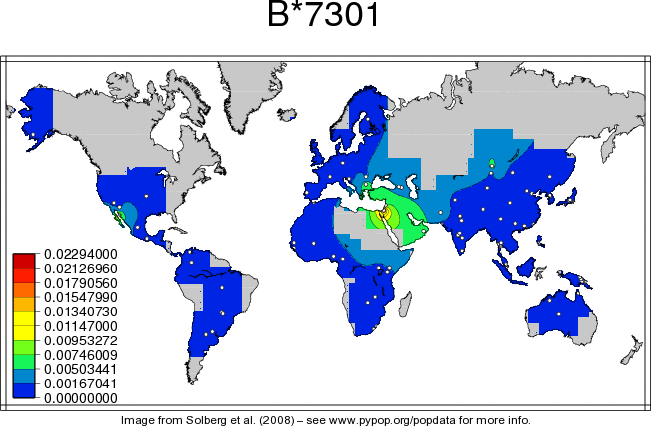
I love maps! As they show things more clearly than a table. Fortunately, all this data was placed in a map by Abi-Rached [1]. In which he shows the Current distribution “A”. Then, trying to explain the anomalously high Pakistan figure, he defines two models which take into account that the Parsi population now living in Pakistan came from Persia, escaping religious persecution. Figure “B” shows one of these models (they are both very similar) which considers the city of Nishapur as the refugee of the persecuted Zoroastrians. There is yet a third map, “C” which shows the global distribution of the HLA-B*73:01 allele, now including Australia and America, as it comes from another source [2] it differs slightly from the data given by [1]. Nevertheless, Maps “A” and “C” are very similar and show the same trend.

HLA-B*73 frequencies
Map showing the global distribution and
frequencies of HLA-B*73:01 (adapted from [1] and [2]
.

Remarks

The maps clearly show some “hot spots” in Mongolia and the Altai Region and an anomaly in Western Mexico (the Seri natives land).

Could the swath across Africa be related to Arab slave trade and possible mixing with locals? Or is it more ancient and shows a returning flow of humans into Africa after acquiring the HLA-B*73 from the Denisovans.

The Balkans, may be due to the Turkish occupation of that area between the 14th and the 19th century.

We see tha China, SE Asia, Australia, Southern Africa and Mots of America and Europe have less than 0.5% frequencies.

So, what does all this mean?

If, as Abi-Rached contends, modern humans picked up the HLA-B*73 allele from Denisovans, they must have “trekked” through Denisovan terrritory. Perhaps the areas where the HLA-B*73 frequency is highest corresponds with the Denisovan homeland: because the humans who settled in the Denisovan territory would have had more time /chances to “mix” with them and breed future generations carrying Denisovan HLA alleles. And from there they would have dispersed to other locations taking the HLA alleles with them.

So, if the maps are correct, Iran is the homeland of the Denisovans. Pakistan’s high figures are just a coincidence, because it is there where the Persian Parsis moved to save their lives.

The Druze and Israeli Jews are also another hot-spot which we will look into later (they are linked to other genetic evidence) , but the high frequency in this region may have two possible explanations:

  • It probably indicates that Denisovans were living in that area along the Jordan River valley
  • Perhaps it reflects the comings and goings of the Jewish people (remember that they were held captive in Babylon (Babylonian exile) after Nebuchadnezzar forced them in o exile after conquering the kingdom of Judah ca. 590 BC. They probably picked up the “Persian” HLA-B*73 during their captivity there, Persia is right next to Israel. Furthermore, after the creation of the state of Israel, many Jews living in Iraq and Iran were forced to move out and migrate to Israel.

Map “C” clearly shows the hot spot centered in the Middle East and fanning out north west into the area where “late” Denisovan remains were later found (Altai). Suggesting perhaps that the Denisovans occupied this area and later were forced to less favorable lands such as Altai and Southern Central Siberia / Mongolia.

Coincidentally this region (Levant, Caucasus and Altai / South Central Siberia) is where Neanderthal remains have also been found. This may just indicate that it was an area where the last remnants of dwindling homind populations found refuge (i.e. Neanderthals and Denisovans).

Denisovans

Since those (H. heidelbergensi?) who would later become Neanderthals and modern humans split from the Denisovans about 1 million years ago, and Denisovans survived until about 30-50 kya, we can imagine that they lived for 1 million years in this same territory. Let’s put this in context and link it to our previous post.

We had said that about 2 million years ago, H. habilis left Africa, settled in the Caucasus and there evolved (1.75 M years ago) into the Dmanisi people Homo georgicus. These in turn led to H. erectus (which peopled Southeastern Asia and China, moved back to Africa and into Europe). The Dmanisi may have also moved on into America and into Flores Island, where they became the local Hobbits.

All of this happened before 1.5 million years ago. Then there is a blank space of half a million years. The next solid evidence is that 1 million years ago, the Denisovans split from the branch that led to modern humans and Neanderthals: the H. heidelbergensis.

What happened in the Dmanisi homeland during the period 1.5 to 1.0 million years ago? Had all the Dmanisi disappeared, becoming H. erectus and migrating to East Asia, Africa (or America)? Did any remain behind, to become the ancestors of both H. heidelbergensis and the Denisovans? Did they die out?

I have not read about any H. erectus fossils being found in South Western Asia, so if the Dmanisi stayed there, and did not become extinct, they had to become something else.

Getting back to Africa, H. ergaster is said to be the ancestor of H. heidelbergensis and of modern humans, so it is them, the H. ergaster who is the most likely common ancestor of Denisovans and the rest of mankind. And, on the “human - Neanderthal” branch, immediately after the Denisovan split, we can fit H. heidelbergensis, see below (it is a revised version of the tree published in yesterday's post):

phylogenetic tree
Revised phylogenetic tree.

This does not tell us anything about the fate of the Dmanisi though. It says that Denisovans split before the appearance of H.heidelbergensis, and marched out of Africa towards the Middle East, settling in South Western Asia where, they would later mix with modern humans and maybe, Neanderthals.

The Seri natives in Mexico

The the Seri language is a linguistic isolate which has no apparent connection with any language in the United States or Mexico. They are only about six hundred Seri left, and a Genetic study [4] seem to link them to the Warao Indians of Venezuela and suggest that the Seri’s ancestors were part of a first wave of migrants into America.[5]

The paper [4] however does not mention HLA-B*73.

There is however more data in Abi-Rached’s paper:

Worldwide, ~98% of people carrying B*73 also carry C*15:05[1]

This C*15:05 (also known as Cw*15:05) as seen in the following maps, is also present in Mexico – see red arrow, as well as all the other Asian regions that have a high frequency of B*73. The maps are from [1] above and [2] bottom and show the same distribution (with the exception of SE Asia, where there is a spot with very high frequency of C*15:05 in Indochina which is not shown in the bottom map.

We have to understand why the Seri have such a high frequency of B*73 and Mexicans of C*15:05 in comparison to the rest of the American Indians.

That will be the subject of a future post.

Map showing the global distribution and
frequencies of HLA-C*15:05 (adapted from [1] and [2]
.

Sources

[1] Abi-Rached, et al. (2011). The Shaping of Modern Human Immune Systems by Multiregional Admixture with Archaic Humans Science 25 August 2011: 1209202DOI:10.1126/science.1209202
[2] Map showing B*7301 dispersion is from This page: Allele frequency net: a database and online repository for immune gene frequencies in worldwide populations. From: Gonzalez-Galarza FF, Christmas S, Middleton D and Jones AR Nucleic Acid Research 2011, 39, D913-D919 and based on Solberg et al (2008) the original is at: http://www.pypop.org/popdata/2008/maps/B-7301.gif
[3] dbMHC Home, NCBI
[4] Infante, E., A. Olivo, C. Alaez, F. Williams, D. Middleton, G. de la Rosa, M. J. Pujol, C. Duran, J. L. Navarro, and C. Gorodezky. ( 1999). Molecular analysis of HLA Class I alleles in the Mexican Seri Indians: Implications for their origin. Tissue Antigens 54:35-42.
[5] Jim Hill, David Yetman, A world revealed by language: a new Seri dictionary and unapologetic speculations on Seri Indian deep history


Patagonian Monsters - Cryptozoology, Myths & legends in Patagonia
2011 International Year of Forests
2011 International Year of Forests Copyright 2009-2011 by Austin Whittall © 

Friday, January 21, 2011

Ostrander skull supposedly an erectus skull

 
Ostrander Skull
Ostrander skull to the left, allegedly from the Hueyatlaco Site. On the left a modern skull. Adapted from [1](Fig. 5) by Austin Whittall


Seeking more information on the possible migration of Homo erectus into America long before modern humans evolved in Africa, I have been checking different leads. Some seem reasonable, but others, like the subject of today's post, don't. Let's look into the "Ostrander skull"

"Ostrander skull" the background

The paper from which I took the image shown above, [1], states the following (I have highlighted some words that are interesting:

The second skull [from the Valsequillo area, the other was the Dorenberg skull, the Ostrander skull apparently was collected by someone at Hueyatlaco in the late 60’s or early 70’s (personal communication, anonymous). I have only one photo of it, sent to me by the late Professor Ostrander in the mid-70’s (Fig.5). Note the thick brow ridges, the low brain case. Merced College in California, where it has been stored all these years does not answer my letters of inquiry concerning it. Rumor has it (personal communication, anonymous) that they have given the skull to a Native American tribe for reburial without attempting to date it.[1]

So here is a skull whose history and fate are based on rumors and anonymous communications. It is an alleged finding of uncertain date, and it probably was reburied at an unknown location to effectively remove the formal proof.

My analysis

Regarding the photograph, the article states that: "I have only one photo of it, sent to me by the late Professor Ostrander in the mid-70’s" [1].

The photographs shows two skulls, one facing the camera, the other rotated to the right, and on an angle tilting it away from the table on which it is set.

I just took the image and drew some lines to measure it (we only have this photograph as proof of the skull's existence). One line across the uppermost part of the skull (roughly the coronal suture where frontal and parietal bones meet), the other aligned with the top of the eye sockets.

For the "Ostrander" skull, shown on an angle, I "straightened" the skull by applying a simple Pythagorean maths, by measuring the sides that make up the right angle of the triangle (yellow lines) and applying Pythagoras' theorem, I came up with the height of the skull (blue line right skull) and compared it with the same dimension on the modern skull (blue line left skull). I admit that due to the skull's rotation (up and to the right), the triangle is an approximate measurement, but, as the results show, pretty accurate.

As the yellow sides measured 96 pixels and 190 pixels the blue one is "X" so:

962 + 1902 = X2

Which works out as: X = 212 pixels.

The modern skull measures: 221 pixels. Just 4.2% more, which seems to be a very small difference and does not prove that the "archaic" skull is erectus.

Furthermore, Charles Ostrander of Mercedes College, appears in a Chemical Directory as [2] its librarian. He also wrote a paper in a chemical jounal. Is it the same Charles Ostrander? I ask this because he does appear as a member of the American Association Of Physical Anthropologists [3]: Ostrander, Mr. Charles R., Merced College,. Merced, California 95340..


Sources.

[1] Virginia Steen-McIntyre, (2002). Approximate dating of tephra using the microscope: "seat-of-the-pants" methods to roughly date quaternary archaeological and paleontological sites by associated pumice and volcanic ash layers". Proceedings Volume International Symposium: Early Man in America and the Implications For the Peopling of the Basin of Mexico August 7-9, 2002 Mexico City.
The image shown above and adapted by me to be able to measure it, is Fig. 5 of the above mentioned paper.
[2]Donald M. Bain (Editor), (1969). International chemistry directory, 1969-70. W.A. Benjamin, pp. 350.
[3] Members. American Journal of Physical Anthropology. Volume 40, Issue 2, pages 299–319, March 1974
[4] Online


Patagonian Monsters - Cryptozoology, Myths & legends in Patagonia
2011 International Year of Forests
2011 International Year of Forests Copyright 2009-2011 by Austin Whittall © 
Hits since Sept. 2009:
Copyright © 2009-2025 by Austin Victor Whittall.
Todos los derechos reservados por Austin Whittall para esta edición en idioma español y / o inglés. No se permite la reproducción parcial o total, el almacenamiento, el alquiler, la transmisión o la transformación de este libro, en cualquier forma o por cualquier medio, sea electrónico o mecánico, mediante fotocopias, digitalización u otros métodos, sin el permiso previo y escrito del autor, excepto por un periodista, quien puede tomar cortos pasajes para ser usados en un comentario sobre esta obra para ser publicado en una revista o periódico. Su infracción está penada por las leyes 11.723 y 25.446.

All rights reserved. No part of this publication may be reproduced, stored in a retrieval system, or transmitted in any form or by any means - electronic, mechanical, photocopy, recording, or any other - except for brief quotations in printed reviews, without prior written permission from the author, except for the inclusion of brief quotations in a review.

Please read our Terms and Conditions and Privacy Policy before accessing this blog.

Terms & Conditions | Privacy Policy

Patagonian Monsters - https://patagoniamonsters.blogspot.com/