Translate

Guide to Patagonia's Monsters & Mysterious beings

I have written a book on this intriguing subject which has just been published.
In this blog I will post excerpts and other interesting texts on this fascinating subject.

Austin Whittall


Showing posts with label homo sapiens. Show all posts

Thursday, April 2, 2026

Oldest Homo Sapiens Sites in the Old World


The map below caught my attention while reading a new article by Zhang et al., 2026 it shows the oldest sites where Homo sapiens remains have been found.


Two things surprised me: (1) Despite Africa being touted the "Cradle of Mankind", 40% of the sites over 100 ky are found in Eurasia. (2) Of the 50 to 30 ky sites, 3 are found in Africa, and the other 14 are in Eurasia and Australia. Of course, the map shows partial information, so there are more sites in Africa, but it is suprising to notice such a prevalence of sites outside of Africa.


Fig. 1. Examples of early H. sapiens fossils older than 100 ka (red circles) and younger specimens dating to 50–30 ka ago (yellow circles) in Africa, Eurasia and Oceania. Fig 1 from Zhang et al., 2026

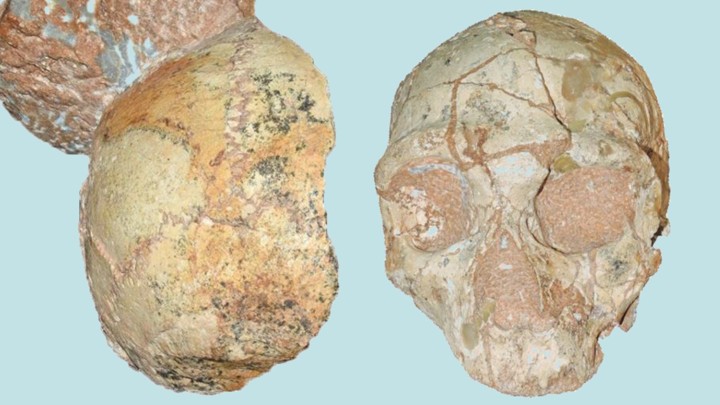
The oldest H. sapiens fossil outside of Africa is from the Greek Cave of Apidima where Apidima 1 skull was found (210,000 years old); see Harvati et al. 2019.


The second oldest is the 190,000-year-old jawbone from the Misliya Cave in Israel, reported by Hershkovitz et al, 2018.


The oldest African site is the Irhoud, Morocco, reported by Hublin et al, 2017, and dated to 315±34 kya. However these hominins have a mix of archaic and modern features that make some scholars wonder if it is a human or another hominin: "[They] have a facial morphology very similar to extant H. sapiens, as well as endocranial volumes that fall within the contemporary range of variation. However, their braincase shapes are elongated rather than globular, suggesting that distinctive features of brain shape, and possibly brain function, evolved within H. sapiens." (Scerri et al., 2018).


The next two African specimens are equal to, or younger than the Eurasian specimens!: Both from Ethiopia, the 195,000-year-old remains from Omo Kibish, and 160,000-year-old bones from Herto. A 2022 paper pushes the dates further back in time to ~230 kya. However, note that they may not be modern humans at all: "The Herto hominids are morphologically and chronologically intermediate between archaic African fossils and later anatomically modern Late Pleistocene humans. They therefore represent the probable immediate ancestors of anatomically modern humans. Their anatomy and antiquity constitute strong evidence of modern-human emergence in Africa." (White et al., 2003).


What is Anatomically Modern Human?


The key issue in my (layman's) opinion is that there seems to be no clear definition of what an Anatomically Modern Human is. Someone who looks like us even though they may not yet have developed behaviors similar to ours.


With a handful of deformed and partial remains (a pice of jaw here, a skullcap there, a few teeth over there) it is impossible to decide if those people who differ from us, and also between themselves, are the norm, or probably outliers of populations that had large intra-population variability.


Does a globe-shaped skull imply more homo-sapiens-similarity than a human-like jaw? Where is the line? Does an oblong skull like the ones found in Morocco count as humans or not? A mossaic of features is human? or primitive? What do archaeologists think about this?


We know that brain size evolved in homo species, and this growth influenced the shape of the skull as different areas of the brain developed, pushed by genetic changes and natural selection. More complex cognitive abilities appeared, the stone tools used by homo individuals gradually changed, improving, becoming more efficient in the use of knapped stone. Acheulean tools of erectus were used for over 1.5 million years, unchanged. Then came Mousterian, Levallois and microblades in a faster sequence of improvement mirroring the changing behavior of our ancestors. The discovery of fire, clothing, use of bone, wood, complex tools, needles, fishooks, symbols engraved on small objects, rock art, burials, all reflect behavioural growth as brains developed.


This evolution led from small skulls, with slanted faces, massive jaws, no chins, heavy browridges, to current gracil, rounded skulls, chins, and high forehads over flat faces.


Is there a sharp line between Modern Humans and "the rest"?


Pearson, 2008 looked into this matter in a detailed paper that ponders the archaic and modern morphology, the reasons for variability (evolutionary adaptation, genetic drift, and the shortcomings of the statistical and biological approaches to the subject.


human and Neanderthal skull and brain

A very interesting research article by Simon Neubauer, Jean-Jacques Hublin, and Philipp Gunz, 2018, analyzed the shape of the skulls and brains, as well as their size. Contemporary human beings have globular (balloon-shaped) brains with an upright forehead and a prominent parietal, the area occupied by the cerebellum is larger and rounded. Or faces are flat. On the other hand, the homo people before us had slanting faces, and elongated brains. (see image comparing a Human and a Neanderthal skull and brain, from Fig. 1 in the 2018 paper above. The authors compared different parameters of brains and skulls of Homo erectus, Neanderthals, and "Humans" from three periods: (1) very early specimens (200-300 kya) from Morocco and Ethiopia, (2) later people from the Middle East and East Africa (100-130 kya), and (3) more recent humans 35-10 kya. The images below show how they align using Principal Component Analysis:


PC1 PC2 comparison homo skulls
Fig. 2 bgPCA of endocranial shape (top) and Fig. 4 bgPCA of endocranial form (bottom). Arrows show the Evolutionary trends of shape changes in archaic and modern individuals are shown as regressions on geologic age. Simon Neubauer, Jean-Jacques Hublin, and Philipp Gunz, 2018

Clearly, there is an evolution from primitive to modern features, with group (2), which included these samples: three from the Levant, Skhul V, Qafzeh 6 and Qafzeh 9 ages 115 ky, and one from Africa, the Ngaloba LH 18 skull from Laetoli, Tanzania (120 kya), closest to moderns and group (3), the latter aged 10 to 30 kya, have brains and skulls that are definitely modern.


Even Anatomically Modern Humans, as they dispersed across the globe following the OOA events carried different skull shapes that can still be identified in contemporary people, and have been used to suggest two migrations and two routes into Eurasia (the "two layer" hypothesis). One comprising Papuans and Oceanians following a South Asian route shares elongated skulls with Africans, the other across Central Asia into Siberia, Europe and East Asia has globular skulls, Europeans have compact jaws, Native Americans and NE Asians share large skulls, higher faces and cranial vaults with tighter foreheads (see Matsumura et al., 2022 and Matsumura et al., 2019).


Even modern humans carry introgressions that modified their skull shape (Neanderthals), as reported by Goovaerts et al., 2025, which has added diversity to non-Africans. Human chins are linked by genes to the flatter face of Homo sapiens. Reearch by Schuch et al., 2025 found that slower and shorter growth after birth, and bone reorption during childhood is a distinctivly human feature, found in all modern humans and absent in Neanderthals, that leads to gracile faces lacking Neanderthal prognathism (jaw protrusion).


Scerri et al., 2018, discusses and questions the orthodox notion that modern humans evolved and emerged within one single, specific population located in a particular region of Africa. The paper aruges that fossils from the early days of humans are very different, and the genetic evidence pointing at a very deep and ancient population structure within Africa (I have mentioned this in other posts, involving isolation, small groups, archaic interbreeding and mutation rates that are different to non-Africans) also supports a multiregional origin involving separate populations, an "African Multi-regionalism."


These isolated popualtions in different environments evolved separately at different paces, and this would explain why they show a combination of archaic and modern traits (they were boxed off in different regions of Africa by very dry deserts and dense tropical jungles —n mountains or glaciers in Africa— and faced different environmental challenges). This article also puts forward some unanswered questions and suggests directions for future research:


"Resolving the speciation of H. sapiens and the character of ancestral populations represents a crucial first step in understanding the emergence of the morphological features that diagnose our species during the later Middle Pleistocene
...
Finally, were some of our anatomical traits inherited from transitional African forms before they became extinct? The range of dates for H. naledi and H. heidelbergensis confirms the late survival of at least two archaic species in Africa. The size and environmental diversity of Africa, particularly the poorly investigated forested regions, may have permitted the late survival of more archaic species as well as of early forms of H. sapiens. These discoveries have fuelled speculations that H. sapiens may have interbred with archaic species in Africa itself. Distinguishing admixture between species from the reintegration of diverse H. sapiens lineages represents a major challenge, with significant taxonomic implications.
...
while a globular braincase does seem to represent a synapomorphy of extant H. sapiens, can it be effectively characterized for application to the fossil record? We emphasize that H. sapiens is a lineage with deep and likely diverse African roots that challenge our use of terms such as ‘archaic H. sapiens’ and ‘anatomically modern humans’. Unless they can be operationalized with more clearly defined traits, such categories will have declining value. Diagnostics of H. sapiens must reflect trajectories of evolution rather than static views of our species – which has changed, and continues to change, at various scales.
"


Into Africa


I believe that it is possible that the homo group leading to Modern humans probably evolved in the Middle East, and moved into Africa from there. However, this notion is contrary to what science believes is the correct approach to our ancestry, and outlined above by Scerri et al. I have the feeling that Chinese scholars will continue their push to have humans appear and evolve in Eastern Asia. Future publications and research will show us how these ideas develop.


Patagonian Monsters - Cryptozoology, Myths & legends in Patagonia Copyright 2009-2025by Austin Whittall © 

Wednesday, October 1, 2025

Ancient split between Homo sapiens and Homo Longi clades: 1.325 Ma


Today's post looks into a new paper published a few days ago, on September 25, 2015 in Science, (Xiaobo Feng et al., The phylogenetic position of the Yunxian cranium elucidates the origin of Homo longi and the Denisovans. Science 389, 1320-1324 (2025). doi:10.1126/science.ado9202)


Th Yunkian 2 skull, Hubei Provincial Museum. Image credit Gary Todd

The authors restored and rebuilt an ancient skull, the Yunxian 2 cranium that had been distorted and compressed. They found that this cranium shows a mosaic of archaic features that " suggest that it is an early member of the Asian H. longi clade, which includes the Denisovans and is the main part of the sister group to the H. sapiens clade. Both the H. sapiens and H. longi clades have deep roots extending beyond the Middle Pleistocene and probably experienced rapid early diversification. Yunxian 2 may preserve transitional features close to the origins of the two clades."


The Yunxian 2 cranium is ancient -0.94 to 1.10 million years (Ma)- and the authors suggest it is close to the last common ancestor to the Homo sapiens and the Homo longi clades, one in Africa and the other in Asia.


This is a major shift in our current knowledge. This specimen pushes the split between modern humans and other hominins further back in time to 1.325 million years ago. The split between these two clades and Neanderthals is also pushed back in this paper to 1.379 Ma.


hominin tree
Hominin phylogenetic tree. From the article in Science

The tree above shows archaic hominins (top) followed by the Neandrthal, H. longi and H. sapiens clades.


Over the next few days we will be posting about the complex panorama of ancient humans in Southern, Eastern and Southeastern Asia.


Patagonian Monsters - Cryptozoology, Myths & legends in Patagonia Copyright 2009-2025 by Austin Whittall © 

Friday, June 25, 2021

Was a Denisovan skull found in Harbin?


Another species? or maybe a Denisovan? A paper (The Innovation, DOI: 10.1016/j.xinn.2021.100130 and DOI: 10.1016/j.xinn.2021.100132, Massive cranium from Harbin in northeastern China establishes a new Middle Pleistocene human lineage) published today, describes a crania discovered in 1933 in Harbin, northern China, but only re-discovered a few years ago, and studied now.

The paper cautiously suggests in a covert manner that this Harbin skull may be a Denisovan one:

"The sister relationship between Harbin and Xiahe, as identified by Bayesian inference (but not parsimony analysis, see the supplemental information), is particularly interesting. The Xiahe mandible shows some proteomic features of the Denisovans, who were informally called “Homo sapiens altaiensis” or “Homo altaiensis,” and sediments from Baishiya Cave have yielded Denisovan mtDNA. The Harbin M2 also matches the known permanent Denisovan molars in size and root morphology, and, ever since the discovery of Denisovans, Asian Middle Pleistocene hominins, such as Dali, Jinniushan, and Xujiayao, have been suspected to represent an East Asian population of the Denisovans"

The remains have been dated to "a minimum age ... of ∼146 ka"

Regarding divergence from the Homo sapiens line, it has some interesting findings: (bold font is mine)

"The results of the Bayesian tip-dating analyses suggest that the Harbin and Xiahe fossils shared a common ancestor ∼188 ka (397–155 ka), and the clade, including the Harbin cranium and H. sapiens shared a common ancestor at ∼949 ka (1,041.41–875.25 ka). The Neanderthal-H. sapiens divergence time in our analysis was ∼1,007 ka (1,114–919 ka). This estimation falls in the range based on mtDNAs for the split between the basal Neanderthal (Sima de los Huesos) and the H. sapiens lineage, but is much older than the estimation based on nuclear DNAs for the splits between the Neanderthal and H. sapiens lineages. However, it is possible that this younger estimated divergence date is an artifact of statistical averaging between “super-archaic” and “recent gene flow” events. The common ancestor of the H. sapiens OTUs (NOTE: OTU is an "Operational Taxonomic Unit", and the term means that the beings under study share a given set of observed characters). included in our analysis is as old as ∼770 ka (922–622 ka), suggesting that the H. sapiens clade has a much deeper origin time than previously estimated. The Eurasian H. sapiens OTUs share a common ancestor ∼416 ka (534–305 ka) old. Outside of Africa, however, the earliest known H. sapiens fossil is only ∼210 ka.
There is a large time gap between the hypothetical common ancestor of Eurasian H. sapiens and the actual fossil record, from the Bayesian tip-dating analysis. One plausible hypothesis is that the ancestral population of Eurasian H. sapiens may have diversified in Africa for many millennia before they dispersed into Eurasia. Genetic studies on ancient DNA suggest that the initial genetic exchanges between Neanderthals and H. sapiens occurred between 468 and 219 ka, or between ∼370 and 100 ka, and the introgression may have originated through gene flow from an African source. Interestingly, not only does the estimated time of the introgression event between Neanderthals and H. sapiens roughly overlap our prediction for the age of the common ancestor of Eurasian H. sapiens, but the African origin of the introgression is also consistent with our African ancestral population hypothesis.
(...)
Africa is the major source of Homo dispersals. In total, ∼40% of all the dispersals are from Africa, while Africa also receives ∼22% dispersals from Asia and Europe. Instead of a unidirectional “out of Africa” model, a multi-directional “shuttle dispersal model” is more likely to explain the complex phylogenetic connections among African and Eurasian Homo species/populations.
"

Let's hope that DNA can be extracted from the skull, it could confirm that this man was in fact a Denisovan.


Patagonian Monsters - Cryptozoology, Myths & legends in Patagonia Copyright 2009-2014 by Austin Whittall © 

Saturday, July 13, 2019

A trait shared by East Asians and Denisovans: three rooted molar


As you can see, by checking my most recent posts, I have been reading recent articles and papers about Homo sapiens in Eurasia. Another one caught my eye: Rare dental trait provides morphological evidence of archaic introgression in Asian fossil record, Shara E. Bailey, Jean-Jacques Hublin, and Susan C. Antón, PNAS first published July 8, 2019 https://doi.org/10.1073/pnas.1907557116.


Bailey, Hublin and Antón found a dental trait in modern humans that is quite rare outside of Eastern Asia and the Americas and yet was found in the jawbones of two Denisovans. This suggests that modern Asians inherited this trait from an ancestral population that lived in Asia.


Let me quote the paper's Abstract to summarize its findings:


"The recently described Denisovan hemimandible from Xiahe, China [F. Chen et al., (2019) Nature 569, 409–412], possesses an unusual dental feature: a 3-rooted lower second molar. A survey of the clinical and bioarchaeological literature demonstrates that the 3-rooted lower molar is rare (less than 3.5% occurrence) in non-Asian Homo sapiens. In contrast, its presence in Asian-derived populations can exceed 40% in China and the New World. It has long been thought that the prevalence of 3-rooted lower molars in Asia is a relatively late acquisition occurring well after the origin and dispersal of H. sapiens. However, the presence of a 3-rooted lower second molar in this 160,000-y-old fossil hominin suggests greater antiquity for the trait. Importantly, it also provides morphological evidence of a strong link between archaic and recent Asian H. sapiens populations. This link provides compelling evidence that modern Asian lineages acquired the 3-rooted lower molar via introgression from Denisovans."


So the three-rooted second molar (3RM2) is unusal outside of Asia and it was found in the Xiahe Denisovan fossil which is 160,000 years old.


The paper also tells us that: "he recently described Penghu 1 mandible from Taiwan (190 to 10 ka) also exhibits a 3RM2 ... The Penghu mandible retains 'archaic' features, including a receding symphysis that lacks a chin, a thick mandibular corpus, and large molar crowns similar in size to Denisovans. Like Xiahe, these exceptionally large molars are coupled with agenesis of the third molar. For these reasons, Chen et al.suggest that Penghu 1 may also be closely related to Denisovans. Both mandibles show that the 3RM anomaly existed in archaic Asian hominins before H. sapiens in the region.".


The authors conclude: " the presence of “archaic features” in recent Asians that were once used to suggest continuity from Pleistocene Asian H. erectus may also have been obtained by introgression from Denisovans."


Some interesting facts they report are that " the 3RM has not been reported in the earliest H. sapiens from Asia, nor have we observed the trait in early H. sapiens from Africa or Homo erectus in Asia.* We note, however, that the lack of radiography of many specimens and the absence of the original Zhoukoudian remains make this conclusion preliminary."


The global prevalecy of the 3RM is highest in Asians (this paper cites a 25% prevalence rate for Nepal) and Esquimos. See the table in this other paper for more info on 3RM prevalence data.


The Homo luzonensis, which lived 67 kya in the Philippines (see post), had teeth that shared features of both modern H. sapiens and ancient H. erectus, yet they were far smaller than those of modern humans and... they also had three rooted molars.


Patagonian Monsters - Cryptozoology, Myths & legends in Patagonia Copyright 2009-2019 by Austin Whittall © 

Homo Sapiens in Greece 210,000 years ago


This paper: Apidima Cave fossils provide earliest evidence of Homo sapiens in Eurasia published in Nature (Katerina Harvati et al., Nature (2019). DOI: 10.1038/s41586-019-1376-z) provides sound evidence that Homo Sapiens were living in Greece 210,000 years ago, which is 150 ky earlier than what had been considered as their arrival date in Europe.


The cave of Apidima had two skulls, located side by side, roughly one foot apart (30 cm). One was identified as that of a Neanderthal, the other, a modern human skull.


Apidima Cave skulls, Homo sapiens (left) and Neanderthal (right).

The human skull is known as Apidima-1, and is definitively a H. sapiens skull based on its shape. It lacks the characteristic occipital bun that Neanderthals have.


The other skull, Apidima-2 is clearly a Neanderthal one. Its age is also correct -it was dated as being 170,000 years old- because Neanderthals lived in Europe at that time.


The paper summarizes its importance:


"Together, the Apidima crania suggest a complex pattern of population dispersal and possible replacement for southern Greece that is not dissimilar to that proposed for the Levant —a potential source area for the population represented by Apidima-1. In such a scenario, early modern humans who were present in the region in the late Middle Pleistocene were replaced by Neanderthals, whose subsequent pres-ence in southern Greece is well-documented. The latter were them-selves replaced by Upper Palaeolithic modern humans, whose earliest appearance in the region—as documented by Upper Palaeolithic lithic industries—dates to approximately 40ka."


The Apidima-1 skull is the oldest known modern human in Europe, and very likely in all of Eurasia. It is over 160,000 years older than the next oldest known European H. sapiens fossil.


The earliest Homo sapiens African remains -Africa is supposed to be the cradle of modern H. sapiens- date back to 315,000 years and were found in Morocco at Jebel Irhoud. Then come the Florisbad remains from South Africa at 260,000 years.


The skulls were washed into the cave in separate events 40,000 years apart, and stuck in the breccia, one foot apart until discovered in the 1970s.


This age of 210 ky is very close to the date assigned to another skull found in Greece, the Petralona crania dated at 160 - 240 kya yet belonging to a hominin which has been alternatively classified as being that of a Homo erectus, a Neanderthal and also a Homo heidelbergensis (ESR-dating of the fossil hominid cranium from Petralona Cave, Greece, G. J. Hennig, W. Herr, E. Weber & N. I. Xirotiris Naturevolume 292, pages 533–536 (1981).


The dates are going back in time, and Sapiens in Eurasia is older than what a few years ago was deemed possible. Perhaps Homo sapiens fossils even older than those found in Africa are out there, waiting to be discovered.


Patagonian Monsters - Cryptozoology, Myths & legends in Patagonia Copyright 2009-2019 by Austin Whittall © 

Saturday, May 18, 2019

An earlier Human - Neanderthal split? (400,000 years earlier!)


Aida Gómez-Robles published a paper in Science Advances three days ago (May 15, 2019 - Dental evolutionary rates and its implications for the Neanderthal–modern human divergence, Vol. 5, no. 5, eaaw1268 DOI: 10.1126/sciadv.aaw1268) in which she finds evidence that "support[s] a pre–800 ka last common ancestor for Neanderthals and modern humans unless hitherto unexplained mechanisms sped up dental evolution in early Neanderthals".


This is really remarkable, as it pushes the conventionally accepted date of divergence back in time from 400 to 800 thousand years ago.


This far older age was worked out by studying ancient Neanderthal teeth from the Sima de los Huesos site in Spain.


Gomez-Robles compared fossilised teeth from archaic hominins such as Australopithecus afarensis, Australopithecus africanus, Paranthropus robustus, Paranthropus boisei, and ancient ones such as Homo habilis, Asian specimens of H. erectus, a Sima de los Huesos H. neanderthalensis and of course, us: Homo sapiens, Other Neanderthal teeth from different sites in Europe were deliberatel left out of the comparative study.


The idea behind the comparison was to see how the shape of teeth in hominins changed over time. Gomez-Robles found that they evolve, and do so at a steady pace. This let estimate when each of these species split from each other.


The conclusion: "The simplest explanation of the results presented in this study is that Neanderthals and modern humans diverged before 0.8 Ma ago", our Last Common Ancestor (LCA) with Neanderthals dates back to 800,000 years ago.


Gomez-Robles goes on to spell out the implications of this more ancient split:


" If the phenotypic LCA of Neanderthals and modern humans was older than 800 ka, this would imply that all fossil hominins younger than this age are no longer valid candidates to occupy this ancestral position. Some fossils younger than this age, however, are frequently considered to be part of the last common ancestral species to Neanderthals and modern humans. These fossils, usually ascribed to Homo heidelbergensis, include European and African specimens, such as Mauer, Arago, Petralona, Bodo, Kabwe, etc., and maybe even some Asian specimens. If Neanderthals and modern humans diverged earlier than 800 ka ago, then all these fossils have to be related either to Neanderthals or to modern humans, or they can be part of a sister lineage to both of them. These fossils, however, cannot be ancestral to Neanderthals and modern humans because they would postdate their evolutionary divergence. An evolutionary relationship between these fossils and both Neanderthals and modern humans would be possible only if they were part of an older ancestral species that persisted in time as a relic species after the actual split of both lineages. Effectively, this scenario would mean that the H. heidelbergensis fossils are part of a sister group to Neanderthals and modern humans but that the evolutionary change from their putative ancestral populations did not involve speciation."


Of course, there are confounding factors that can explain the structural differences in teeth without requiring such an older age, for instance: the teeth evolved quicker in a small population of Neanderthals, isolated from other human groups, making them seem older while they are actually only 400 Ky old.


Patagonian Monsters - Cryptozoology, Myths & legends in Patagonia Copyright 2009-2019 by Austin Whittall © 

Sunday, April 7, 2019

Some Odd teeth in China


A paper (Late Middle Pleistocene hominin teeth from Tongzi, southern China, by Song Xinga, María Martinon-Torres and Jose MariaBermudez de Castro) reported that some teeth roughly 200,000-years-old found in the Yanhui cave in China, which were originally thought to belong to Homo erectus, may belong to some other hominin.


They have a mix of modern and archaic traits, which lack some characteristic features of H. erectus, but don't belong to Neanderthals either!


Since modern H. sapiens was still in Africa at that time, these teeth (because they are large) may have belonged to the mysterious Denisovan group.


Expect some surprising findings to come out of China in the coming years. Asia was teeming with "humans" long before the purported "out of Africa" migration took place. It may be the cradle of humankind.


Patagonian Monsters - Cryptozoology, Myths & legends in Patagonia Copyright 2009-2019 by Austin Whittall © 

Friday, November 23, 2018

Levallois tools: did this technology originate in Asia?


Earlier this year, a paper (Kumar Akhilesh et al., Early Middle Palaeolithic culture in India around 385–172 ka reframes Out of Africa models, Nature volume 554, pages 97-101, 01 February 2018) reported finding Levallois stone tools in a site called Attirampakam, in India. These tools were about 385,000 years old, which put the date of this stone knapping technology further back in time than had been previously expected.


These Indian tools are even older than the Levallois tools found in Africa, and they predate the currently accepted date of Homo sapiens expansion out of Africa.


Modern Brains


The Levallois tools represent a shift in stone knapping know-how. Until then the Acheulian (developed by Homo erectus) technique had been in use for over 1.4 million years.


It was named after the site where they were first discovered in the 1800s: Levallois-Perret, a suburb of Paris, in France.


It is distinctive of a more brainier hominid, who developed a new technique for knapping stones to obtain sharp flint tools.


But who made them? until recently it had been suggested that they were the result of archaic Homo sapiens migrating out of Africa.


But with the Indian tools dated around 385 kya and some found in Armenia (D.S. Adler et al., Early Levallois technology and the Lower to Middle Paleolithic transition in the Southern Caucasus, Science 26 Sep 2014: Vol. 345, Issue 6204, pp. 1609-1613 DOI: 10.1126/science.1256484) aged 325 kya, this explanation seems unfounded: there were no H. sapiens at that time.


Adler writes: "Our data from Nor Geghi, Armenia... are consistent with the hypothesis that this transition occurred independently within geographically dispersed, technologically precocious hominin populations with a shared technological ancestry."


Suggesting a pre-Homo sapiens origin.


The oldest remains of Homo sapiens and Levallois tools are from a site in Morocco and they are much more recent than the Armenian and Indian tools: 315,000 years old. (Read more).


We know that the Neanderthal made them in Europe, could they be the authors of these Eurasian tools?


A paper published four days ago: Yue Hu et al.Late Middle Pleistocene Levallois stone-tool technology in southwest China, https://doi.org/10.1038/s41586-018-0710-1 DO 10.1038/s41586-018-0710-1 ID Nature 19. Nov. 2018), reports finding Levallois tools in China:


"Here we present evidence of Levallois technology from the lithic assemblage of the Guanyindong Cave site in southwest China, dated to approximately 170,000-80,000 years ago. To our knowledge, this is the earliest evidence of Levallois technology in east Asia. Our findings thus challenge the existing model of the origin and spread of Levallois technologies in east Asia and its links toa Late Pleistocene dispersal of modern humans."


So once again who made them? This date is prior to any known H. sapiens presence in China. Were they Neanderthals? or perhaps Denisovans, who lived in Southern and Central Asia at that time?


Here we have a technological break-through that seems to have originated Out of Africa and not In Africa, our purported craddle of mankind. Did modern humans evolve outside of Africa?


Patagonian Monsters - Cryptozoology, Myths & legends in Patagonia Copyright 2009-2018 by Austin Whittall © 

Wednesday, May 16, 2018

Sub Saharan Africans admixed with archaic hominins and that gave them more diverse genes


And yes, another post on archaic hominin introgression into modern humans in Africa: Yorubans have admixed with an unknown hominin and this gave them archaic genes. So much for the "diversity" of Sub Saharan Africans as proof of them being ancestral to the rest of human beings.


This paper: Recovering signals of ghost archaic admixture in the genomes of present-day Africans, by Arun Durvasula and Sriram Sankararaman - doi: https://doi.org/10.1101/285734 - says that:


"Yoruban individuals trace about 7.9% of their genomes to an as yet unidentified archaic population."


An eight percent of their genes are archaic far more than the Neanderthal admixture in Eurasians or the Denisovan introgression into non-Africans... This is really a "Big" introgression and that explains why they, the Africans are so different and "diverse" from non-Africans. They mixed with diverse ancient genes of some unknown hominin. So they aren't older than us, they simply "admixed" with archaic hominins.


The authors add:


"suggesting that there was a rich diversity of hominin species within Africa and that introgression was commonplace. Using our inferred segments of archaic ancestry in the Yoruba, we find that there are regions of the genome that are under higher selective constraint have reduced archaic ancestry on average indicating that the archaic alleles were deleterious in the hybrid population. More data is needed for a complete picture of these ghost populations. For example, it is unclear whether the archaic signatures found here are from the same as those found in other African populations"
....
"...Taken together, these results suggest that introgression from one or more deeply diverged populations 278 has shaped the genomes of a modern human population in Africa."


And no, these ancient genes didn't come from mixing with Pygmies. The authors found evidence "...suggesting that the Biaka are not the source of admixture"


Patagonian Monsters - Cryptozoology, Myths & legends in Patagonia Copyright 2009-2018 by Austin Whittall © 

Archaic hominins admixed with Pygmies in Africa


Continuing with the theme of "archaic hominins admixed with modern humans in Africa leading to their current genetic diversity", I read this paper: Model-based analyses of whole-genome data reveal a complex evolutionary history involving archaic introgression in Central African Pygmies, by PingHsun Hsieh, August E. Woerner, Jeffrey D. Wall, Joseph Lachance, Sarah A. Tishkoff, Ryan N. Gutenkunst and Michael F. Hammer. February 17, 2016, doi: 10.1101/gr.196634.115 Genome Res. 2016. 26: 291-300.


Spoiler alert: the Pygmies, often touted as being diverse, isolated from the rest of H. sapiens, according to this paper, are part of the "...complex human evolutionary history in Africa, which involves at least a single admixture event from an unknown archaic population into the ancestors of AMH, likely within the last 30,000 yr.".


An admixture 30 Kya, after the alleged Out of Africa event means that some archaic group with very diverged genes mixed with modern Humans in Africa and gave them "old" and "diverse" genes, which would, in my opinion, make them seem "more diverse" than the rest of non-African Homo sapiens.


Below I quote from this paper:


" Plagnol and Wall (2006) and Wall et al. (2009) inferred a 5% genetic contribution from a now-extinct taxon to the Niger-Kordofanian Yoruba farmers or their ancestors. Hammer et al. (2011) analyzed DNA sequence data from 61 noncoding loci in three contemporary sub-Saharan African populations. They found that hunter-gatherer African populations, including the Biaka Pygmy, Mbuti Pygmy, and San, contain ∼2% genetic material likely introgressed ∼35 kya from an archaic population that split from the ancestors of modern humans ∼700 kya." (This last citation, Hammer et al, is what I mentioned in my previous post).


"...our inferences suggest recurrent archaic admixture in AMH evolution in Africa, with evidence that at least one such event occurred as recently as ∼9000 yr ago."


"...our results imply that frequent but low-level interbreeding between archaic and modern humans or their ancestors might have occurred in the past in Africa."


Of course the dates are uncertain: "... we found evidence of at least one African archaic admixture event within the last ∼150,000 yr. From our simulation study, this inferred admixture date of ∼9000 (95% C.I.: 1305–28,275) yr ago should be treated as a lower bound".


"However, it is important to point out that archaic introgression need not have been directly into the ancestors of modern Pygmies; rather, it may have resulted from recent gene flow from one or more modern human populations that themselves were recently admixed or that shared recent common ancestry with some unknown archaic hominin(s). The date of the inferred admixture is coincident with the development of agriculture in Africa ∼5–10 kya (Phillipson 2005) and the estimated time of agriculture expansion for Niger-Kodorfanian-speaking farmers ∼7 kya (95% C.I.: 5.7–9.6 kya) (Li et al. 2014). African Pygmies have undergone extensive gene flow with neighboring farmers (Patin et al. 2009; Tishkoff et al. 2009; Jarvis et al. 2012; Hsieh et al. 2016), and recent studies suggest that some Western African populations, including the Niger-Kodorfanian Yoruba farmers from Nigeria, show strong signals of ancient admixture (Plagnol and Wall 2006; Wall et al. 2009). Thus, it is plausible that archaic lineages associated with this inferred admixture event introgressed recently into one or more non-Pygmy African populations, such as the ancestors of African farmers, and subsequently entered the Pygmy population through recent gene flow from these non-Pygmy neighboring groups."


So much for the ancient roots of Pygmies and their archaic Y chromosome and mtDNA... could these have been an introgression from these "ghost" archaic hominins?


Interested in archaic introgression within Africa? Check this post: Archaic MUC7 Haplotype introgression in Africa.


Patagonian Monsters - Cryptozoology, Myths & legends in Patagonia Copyright 2009-2018 by Austin Whittall © 

More on archaic introgression into H. sapiens in Africa: the source of African's genetic diversity


In a recent post titled African diversity is the result of admixture with archaic hominids I once again supported the notion that African genetic "diversity" is probably due to admixture between modern humans and archaic hominids in Africa and not the result of Homo sapiens having originated in Africa long ago, and all the rest of non-Africans having less "diversity" due to founder effects & bottle-necks.


Today I came across this paper: Genetic evidence for archaic admixture in Africa by Michael F. Hammer, August E. Woerner, Fernando L. Mendez, Joseph C. Watkins, and Jeffrey D. Wall. PNAS September 6, 2011. 201109300; published ahead of print September 6, 2011. https://doi.org/10.1073/pnas.1109300108.


The paper puts forth proof of an archaic hominin admixing with Homo sapiens during a "recent interbreeding event". The abstract says (I highlighted relevant parts in bold font):


"A long-debated question concerns the fate of archaic forms of the genus Homo: did they go extinct without interbreeding with anatomically modern humans, or are their genes present in contemporary populations? This question is typically focused on the genetic contribution of archaic forms outside of Africa. Here we use DNA sequence data gathered from 61 noncoding autosomal regions in a sample of three sub-Saharan African populations (Mandenka, Biaka, and San) to test models of African archaic admixture. We use two complementary approximate-likelihood approaches and a model of human evolution that involves recent population structure, with and without gene flow from an archaic population. Extensive simulation results reject the null model of no admixture and allow us to infer that contemporary African populations contain a small proportion of genetic material (≈2%) that introgressed ≈35 kya from an archaic population that split from the ancestors of anatomically modern humans ≈700 kya. Three candidate regions showing deep haplotype divergence, unusual patterns of linkage disequilibrium, and small basal clade size are identified and the distributions of introgressive haplotypes surveyed in a sample of populations from across sub-Saharan Africa. One candidate locus with an unusual segment of DNA that extends for >31 kb on chromosome 4 seems to have introgressed into modern Africans from a now-extinct taxon that may have lived in central Africa. Taken together our results suggest that polymorphisms present in extant populations introgressed via relatively recent interbreeding with hominin forms that diverged from the ancestors of modern humans in the Lower-Middle Pleistocene.


The authors add "... central Africa may have been the homeland of a now extinct archaic form that hybridized with modern humans".


This is an extremely interesting step in the right direction!


Patagonian Monsters - Cryptozoology, Myths & legends in Patagonia Copyright 2009-2018 by Austin Whittall © 

Tuesday, January 30, 2018

John Hawks on the Misliya jawbone


Below I quote John Hawks on the importance of the Misliya cave jawbone. His opinion is very interesting. Read his full post here.


(See my Previous post on this jawbone, which places modern humans outside of Africa some 177,000 to 194,000 years ago, far earlier than previously thought).


Hawks wrote:


"...There is a major change underway in how we understand “out of Africa”. I don’t think the traditional framing of “out of Africa” is very effective anymore, as leaving Africa is a tiny event, repeated many times over the last several hundred thousand years.
In the context of other discoveries, I think that “modern human” has lost much of the meaning it may once have had.
The big questions concern what was happening inside Africa, where many genetically diverse populations existed and interacted. How many ancestral populations gave rise to the growing population of modern humans after 100,000 years ago? How many African-derived people were involved in mixture with Neandertals 250,000 years ago, or 120,000 years ago? Did African-derived humans make it to China, or to Java, before 100,000 years ago?
Those are open questions, with some evidence pointing toward faster, more widespread dispersal, more mixture, and repeated genetic replacements.
"


Patagonian Monsters - Cryptozoology, Myths & legends in Patagonia Copyright 2009-2018 by Austin Whittall © 

Thursday, January 25, 2018

The earliest modern humans outside Africa: more older than expected


For the last year, more papers have been published suggesting an earlier age for Homo sapiens and an earlier Out of Africa migration. Today I read a paper in Science that pushes our "Out of Africa" event even further back in time (not that I believe in the OOA event) in other words Humans were in Asia long before the date currently accepted for that event (did we originate in Asia and move into Africa?).


This is the paper: The earliest modern humans outside Africa, Israel Hershkovitz et al. Science 26 Jan 2018:Vol. 359, Issue 6374, pp. 456-459 DOI: 10.1126/science.aap8369


And this is the free info (the rest is behind Science magazine's paywall:


Earliest modern humans out of Africa
Recent paleoanthropological studies have suggested that modern humans migrated from Africa as early as the beginning of the Late Pleistocene, 120,000 years ago. Hershkovitz et al. now suggest that early modern humans were already present outside of Africa more than 55,000 years earlier (see the Perspective by Stringer and Galway-Witham). During excavations of sediments at Mount Carmel, Israel, they found a fossil of a mouth part, a left hemimaxilla, with almost complete dentition.
The sediments contain a series of well-defined hearths and a rich stone-based industry, as well as abundant animal remains. Analysis of the human remains, and dating of the site and the fossil itself, indicate a likely age of at least 177,000 years for the fossil—making it the oldest member of the Homo sapiens clade found outside Africa.
Science, this issue p. 456; see also p. 389


Abstract
To date, the earliest modern human fossils found outside of Africa are dated to around 90,000 to 120,000 years ago at the Levantine sites of Skhul and Qafzeh. A maxilla and associated dentition recently discovered at Misliya Cave, Israel, was dated to 177,000 to 194,000 years ago, suggesting that members of the Homo sapiens clade left Africa earlier than previously thought. This finding changes our view on modern human dispersal and is consistent with recent genetic studies, which have posited the possibility of an earlier dispersal of Homo sapiens around 220,000 years ago. The Misliya maxilla is associated with full-fledged Levallois technology in the Levant, suggesting that the emergence of this technology is linked to the appearance of Homo sapiens in the region, as has been documented in Africa.


End of Science info.


So now we have a date of 177 to 194,000 years BP for humans in the Middle East. Meaning they got there even earlier -or did by chance did the teeth belong to the first arrival?. Now I ask why suppose that the H. sapiens went "OUT" of Africa instead of reaching Israel from some place in Asia and then going "INTO" Africa.


As usual, more discoveries will force change on closed minds


By the way, Happy New Year and a great 2018 for all of you.


Patagonian Monsters - Cryptozoology, Myths & legends in Patagonia Copyright 2009-2014 by Austin Whittall © 

Wednesday, July 26, 2017

Into Africa: sub-Saharan genetic diversity is due to introgression with archaics


Following up on my previous post, I want to share some more papers on the subject of the admixture of Homo sapiens and archaic hominins in Africa, which may be the cause of the "genetic diversity" which is the main evidence supporting an African origin of modern humans.


This paper (Genetic evidence for archaic admixture in Africa, by Michael F. Hammera, August E. Woernera, Fernando L. Mendezb, Joseph C. Watkinsc, and Jeffrey D. Walld) reached the following conclusions:


"Extensive simulation results reject the null model of no admixture and allow us to infer that contemporary African populations contain a small proportion of genetic material (˜2%) that introgressed ˜35 kya from an archaic population that split from the ancestors of anatomically modern humans ˜700 kya."
...
"Th[is] suggests that one such introgression event may have taken place in central Africa (where there is a very poor fossil record). Interestingly, recent studies attest to the existence of Late Stone Age human remains with archaic features in Nigeria (Iwo Eleru) and the Democratic Republic of Congo (Ishango)"


The authors cite This paper (Allsworth-Jones, P., Harvati, K. and Stringer, C. (2010) The archaeological context of the Iwo Eleru cranium from Nigeria and preliminary results of new morphometric studies. In: Allsworth-Jones, P., (ed.) West African Archaeology New developments, new perspectives. BAR, S2164 . Archaeopress , pp. 29-42. ISBN 978 1 4073 0708 4):


""... results highlighted apparent archaic aspects in the specimen in its long and rather low cranial shape, and although modern overall, it also resembled fossils such as Omo Kibish 2 and Ngandong in certain respects. New studies... establish the relatively archaic shape of the vault, and confirm that this Late Stone Age individual was markedly different from succeeding populations.".


So we have archaic humans living relatively recently, and, the recent studies on Homo naledi also show that it was contemporary to the earliest modern humans (but it did not live -as far as we know in Central or Western Africa, but in South Africa:


In This paper we see that Homo naledi, is quite primitive but also relatively recent (The age of Homo naledi and associated sediments in the Rising Star Cave, South Africa. Paul HGM Dirks. https://doi.org/10.7554/eLife.24231.001):


""We... establish[ed] that all sediments containing Homo naledi fossils can be allocated to a single stratigraphic entity ... interpreted to be deposited between 236 ka and 414 ka. This result has been confirmed independently by dating three H. naledi teeth with combined U-series and electron spin resonance (US-ESR) dating. Two dating scenarios for the fossils were tested ...: a maximum age scenario provides an average age for the two least altered fossil teeth of 253 +82/–70 ka, whilst a minimum age scenario yields an average age of 200 +70/–61 ka. We consider the maximum age scenario to more closely reflect conditions in the cave, and therefore, the true age of the fossils... we have constrained the depositional age of Homo naledi to a period between 236 ka and 335 ka. These age results demonstrate that a morphologically primitive hominin, Homo naledi, survived into the later parts of the Pleistocene in Africa, and indicate a much younger age for the Homo naledi fossils than have previously been hypothesized based on their morphology."


In other words dating range from 139 to 414 ka but the authors selected intermediate dates. They too seem surprised by its archaic appearance at such a late date.


And it was indeed "archaic" as attested by this paper (Human Evolution: The many mysteries of Homo naledi, Chris Stringer) which says:


"...Berger et al. describe how the collection displays a unique combination of primitive and derived characteristics (Berger et al., 2015). For example, the small brain size, curved fingers and form of the shoulder, trunk and hip joint resemble the prehuman australopithecines and the early human species Homo habilis. Yet the wrist, hands, legs and feet look most like those of Neanderthals and modern humans. The teeth have some primitive features (such as increasing in size towards the back of the tooth row), but they are relatively small and simple, and set in lightly built jawbones. Overall, to my eye, the material looks most similar to the small-bodied examples of Homo erectus from Dmanisi in Georgia, which have been dated at ~1.8 million years old".


Interesting that H. naledi resembles more primitive Homo erectus with an age of 1.8 million years when it is only roughly 200 ka old!.


Another Paper (Genome Research Published in Advance February 17, 2016, doi: 10.1101/gr.196634.115 Model-based analyses of whole-genome data reveal a complex evolutionary history involving archaic introgression in Central African Pygmies, PingHsun Hsieh et al.) supports this idea of an archaic introgression, but this time, in Pygmies!:


"... our inference method rejects the hypothesis that the ancestors of AMH were genetically isolated in Africa, thus providing model-based whole genome-level evidence of African archaic admixture. Our inferences also suggest a complex human evolutionary history in Africa, which involves at least a single admixture event from an unknown archaic population into the ancestors of AMH (anatomically modern humans), likely within the last 30,000 yr."


These findings plus that of an early presence of Homo sapiens in Morocco - In this paper (New fossils from Jebel Irhoud, Morocco and the pan-African origin of Homo sapiens, Jean-Jacques Hublin et al. Nature 546, 289–292, 2017):


"...We identified a mosaic of features including facial, mandibular and dental morphology that aligns the Jebel Irhoud material with early or recent anatomically modern humans and more primitive neurocranial and endocranial morphology. In combination with an age of 315?±?34 thousand years (as determined by thermoluminescence dating)3, this evidence makes Jebel Irhoud the oldest and richest African Middle Stone Age hominin site that documents early stages of the H. sapiens clade..."


An age which clearly overlaps that of H. naledi


These findings may lead to an overhaul of the Out Of Africa theory as it is not implausible that H. sapiens originated in Eurasia or even America from other Out Of Africa migrants that departed long ago (Neanderthal ancestors or even H. erectus), and then they peopled Africa recently from North to South and mixed during their Into Africa journey with archaics like Naledi or Iwo Eluru, picking up genetic diversity and carrying it into sub-Saharan Africa with them.


Maybe archaic DNA will be recovered from Naledi and clarify the situation.


Patagonian Monsters - Cryptozoology, Myths & legends in Patagonia Copyright 2009-2017 by Austin Whittall © 

Friday, July 7, 2017

An even older Out of Africa event (270kya)!!


A paper published in Nature, by Cosimo Posth et al, published in Nature looks into the odd discrepancy in the age of the split between Modern Human and Neanderthal genomes


The date of the split between humans and Neanderthals differs when you consider their nuclear or their mtDNA:


  • Nuclear DNA says that humans and Nearnderthals split some 765,000 to 550,000 years ago
  • Mitochondrial DNA or mtDNA says we split 365,000 to 400,000 years ago

I believe that discrepancies are what makes science leap forward (like the problems caused by the "ether" theory that led to relativity and quantum physics). And a gap like this of several hundreds of thousands of years is a big discrepancy. Either the dating is all wrong and has to be reviewed (ie. mutation rates and so forth), or the current ideas on the migration and origin of Homo sapiens are incorrect.

The paper looks into the mtDNA extracted a "complete mtDNA of an archaic femur from the Hohlenstein–Stadel (HST) cave in southwestern Germany. HST carries the deepest divergent mtDNA lineage that splits from other Neanderthals ∼270,000 years ago..."

This date of 270 kya is actualy the average, the real divergence date between HST and all other Neanderthals (95% HPD) is between 316 and 219 kya. The Altai Neanderthals split from the other Neanderthals some ∼160,000 years ago (95% HPD of 199 - 125 kya).


This paper tries to explain the genetic incongruence of Sima de los Huesos (see my post Sima de los Huesos remains, Neanderthals, Denisovans and their nuclear and mtDNA), the remains from Sima de los Huesos in Spain which are 430 ky old, have mtDNA that resembles that of Denisovans more closely than that of the Neanderthals. But, their nuclear DNA is more similar to that of Neanderthals than to Denisovan nuclear DNA.

The authors write (Bold is mine) that the nuclear DNA (nDNA) "... from the Sima de los Huesos site... confirmed their closer affinity to the Neanderthal lineage, suggesting that at least by ∼430 ka, Neanderthals and Denisovans had already diverged. However, in contrast to genome-wide data, the Sima de los Huesos mtDNA was found to branch off with the deeply divergent Denisovan mtDNA lineage. The phylogenetic discrepancies could be reconciled if the mtDNA of early Neanderthals was indeed Denisovan-like and was subsequently replaced by a more derived mtDNA lineage.".

This "derived mtDNA" got into the Neanderthals through " a genetic introgression event from African hominins into the early Neanderthal population that gave rise to the ‘Late Pleistocene’ Neanderthal mtDNA lineage".

This introgression took place long ago, and came from " an African source, which we constrain taking place more than ∼270 ka". In other words the paper suggests an Out of Africa event over 270,000 years ago which admixed human mtDNA into Neanderthals, mtDNA which replaced the older mtDNA -i.e. Denisovan and Sima de los Huesos hominin, with a new lineage, the "African mtDNA that evolved into the Late Pleistocene Neanderthal mtDNA type". And this "new" mtDNA spread from the HST Neanderthal in Germany to all others, including Sidron in Spain and eastwards all the way to Altai. Thousands of kilometers from the Atlantic to Siberia.

Furthermore, they estimate that "if Ne (effective population) was <5,000 units, a mean temporal interval of 300 ka is sufficient for an incoming mtDNA lineage below 0.1% in frequency to drift up to fixation." in other words, a very small initial input of "African genes".
But looking at this theory with a critical eye, we must point out that Neanderthals were spread out over a very wide area, which makes it very difficult for this replacement to take place in the whole population.

Furthermore a different explanation can be found: if modern humans were already outside of Africa i.e. in Asia, and they mixed with the Neanderthals outside of Africa -no Africans involved in the introgression. They would have had plenty of time to admix over a wide area, and this would also explain why there was an Ancient gene flow from early modern humans into Eastern Neanderthals 100,000 years ago as suggested by Martin Kuhlwilm et al, in Nature, Feb. 2016. DOI:10.1038/nature16544.

So instead of suggesting an earlier migration (it actually took place 1.8 Mya when Homo erectus left Africa for Asia) why not think about H. sapiens living in Eurasia and mixing with Neanderthals?

I wonder how this ties in with the Oldest Homo sapiens remains dating back to 315,000 years ago, found in Morocco?
 
Sources

(1) Deeply divergent archaic mitochondrial genome provides lower time boundary for African gene flow into Neanderthals, Cosimo Posth, Christoph Wißing, Keiko Kitagawa, Luca Pagani, Laura van Holstein, Fernando Racimo, Kurt Wehrberger, Nicholas J. Conard, Claus Joachim Kind, Hervé Bocherens & Johannes Krause. Nature Communications 8, Article number: 16046 (2017). doi:10.1038/ncomms16046.


Patagonian Monsters - Cryptozoology, Myths & legends in Patagonia Copyright 2009-2017 by Austin Whittall ©

Wednesday, March 29, 2017

Into Africa, some proof on an Out Of America origin of modern Homo sapiens


Regarding my previous post where I mentioned a paper on the non-African origin of modern humans, I have come across another very interesting paper: "Explaining worldwide patterns of human genetic variation using a coalescent-based serial founder model of migration outward from Africa" by Michael DeGiorgio, Mattias Jakobsson and Noah A. Rosenberg (Proc Natl Acad Sci U S A. 2009 Sep 22; 106(38): 16057–16062. Published online 2009 Aug 17. doi: 10.1073/pnas.0903341106) which offers an interesting model which can explain the greater diversity of Africans and at the same time make them the "most recent" humans instead of the oldest ones.


The usual argument for an Out of Africa origin of Homo Sapiens is the higher diversity in Africa versus that of non-African populations. A typical example used as proof is the graph showing how Heterozygosity decreases with the distance to Africa (there are countless of these on the internet, with the Y axis showing Heterozygosity and the X axis showing the distance from Addis Abbaba), below is one of them:


A typical heterozygosity vs. distance to Ethiopia. From Fig. 2 in [1]

Notice the negative gradient of the graph (shown by the dashed line in the figure -Fig. B, on the right). Heterozygosity falls from left to right.


The paper by DeGiorgio, Jakobsson and Rosenberg which caught my attention explores a models to explain this fact. In doing so they analyze different alternatives. And the one they discard because it does not fit the current idea of an Out of Africa model, is precisely the one that explains the data, if you accept a non-African origin of mankind. Allow me to explain:


Archaic Persistence Model


The team developed this "archaic persistence model" in which an archaic population evolved-mutated and originates modern humans (Homo sapiens). And as this first original and most ancient Homo sapiens population expands outwards from its homeland, it spreads gradually forming colonies which move into a "collection of preexisting archaic populations". For instance Denisovans, Neanderthals or even surviving yet unknown Chinese hominds -or Homo erectus descendants...


In the words of the authors, this is what they observed as the populations moved away from the original nucleous, the first modern human population:

"Heterozygosity increases, LD decreases, and the ancestral allele frequency spectrum slope increases with increasing colony number. These results can be understood from the fact that in the long time since the initial divergence, the K archaic populations have enough time to develop distinctive localized variants. As the migration wave travels through them, it accumulates diversity, gathering new variants from each population through which it passes. Thus, heterozygosity increases with increasing colony number in the same way that it increases in the archaic admixture model at the population in which admixture occurs. The difference between models lies in the fact that in the archaic persistence model, archaic admixture occurs in every population, so that heterozygosity increases at each step rather than at a single location. This occurrence of archaic admixture at each step also explains the decrease in LD and increase in the slope of the ancestral allele frequency spectrum that occur at each step...


In other words they observed that if the original, the "first real" human group, was in Africa, as we moved further away from there we should find more heterozygosity, which we don't. Hence the model is wrong and despite having originated in Africa we did not go through this type of admixture.


But lets just look at this with a more open mind:


Turn it around!


However if the original home of modern humans (Homo sapiens) was in America and not Africa, then, as they migrated outwards from America, into Asia, Oceania, Europe and went through each of the archaic populations in the old world, adding diversity and finally reached Africa mixing with the archaics there, the heterozygosity would be lowest in America and grow towards Africa, which is exactly what their model finds and which coincides with the observed heterozygosity cline in modern humans.


So It all makes sense if you invert the origin of the first humans: form Africa, to America.


Below is the image showing how heterozygosity grows as you move away from the original H. sapiens population if you assume the Archaic Persistence Model, the authors discard it because the actual observed heterozygosity falls as you move away from Africa:


From Fig 6 in DeGiorgio, Jakobsson and Rosenberg, adapted by A. Whittall

Now let's turn this same figure around and the result is a graph with a negative gradient which is exactly the same as the first graph we used in this paper (the distance to A. Abbaba & heterozygosity):


Same figure as above but we change the location of the first modern humans
Adapted by Austin Whittall

As an engineer, I sometimes get the feeling that Anthropology and those who study the origins of humanity are like the late 1800s Physicists who despite all the evidence kept on pushing the notion of ether or fiddle with the data to uphold classic mechanics. It took Einstein and Plank to change the paradigm with their Relativity and Quantum theories. Something similar took place in the 1500s, with Copernicus explaining with graceful simplicity the movement of the planets, doing away with the complex Ptolomean system. A shift in mindset is needed to look at the same data to find the necessary changes and to avoid adhering to theories that contradict that data.


Sources


[1] Verdu P, Pemberton TJ, Laurent R, Kemp BM, Gonzalez-Oliver A, Gorodezky C, et al. (2014) Patterns of Admixture and Population Structure in Native Populations of Northwest North America. PLoS Genet 10(8): e1004530. doi:10.1371/journal.pgen.1004530


Patagonian Monsters - Cryptozoology, Myths & legends in Patagonia Copyright 2009-2014 by Austin Whittall © 

Thursday, October 15, 2015

An earlier dispersal of Modern Humans or an Asian origin for mankind?


A very interesting paper by Liu, W. et al. in Nature The earliest unequivocally modern humans in southern China http://dx.doi.org/10.1038/nature15696 (2015) reports having found modern human teeth in Southern China that are at least 80,000 years old, and up to 120,000 years old. This is clearly at odds with other papers that suggest a much later "Out Of Africa" event.


The Abstract reads:


"The hominin record from southern Asia for the early Late Pleistocene epoch is scarce. Well-dated and well-preserved fossils older than ~45,000 years that can be unequivocally attributed to Homo sapiens are lacking. Here we present evidence from the newly excavated Fuyan Cave in Daoxian (southern China). This site has provided 47 human teeth dated to more than 80,000 years old, and with an inferred maximum age of 120,000 years. The morphological and metric assessment of this sample supports its unequivocal assignment to H. sapiens. The Daoxian sample is more derived than any other anatomically modern humans, resembling middle-to-late Late Pleistocene specimens and even contemporary humans. Our study shows that fully modern morphologies were present in southern China 30,000–70,000 years earlier than in the Levant and Europe. Our data fill a chronological and geographical gap that is relevant for understanding when H. sapiens first appeared in southern Asia. The Daoxian teeth also support the hypothesis that during the same period, southern China was inhabited by more derived populations than central and northern China. This evidence is important for the study of dispersal routes of modern humans. Finally, our results are relevant to exploring the reasons for the relatively late entry of H. sapiens into Europe. Some studies have investigated how the competition with H. sapiens may have caused Neanderthals’ extinction (see ref. 8 and references therein). Notably, although fully modern humans were already present in southern China at least as early as ~80,000 years ago, there is no evidence that they entered Europe before ~45,000 years ago. This could indicate that H. neanderthalensis was indeed an additional ecological barrier for modern humans, who could only enter Europe when the demise of Neanderthals had already started."


In the article (by some odd miracle I was granted Online access to the article by the nature.com content sharing initiative) it mentions that: "This evidence could support different origins and/or dispersal routes for modern humans across Asia". And indeed it does. Here we have humans in China 80 to 120 kya while they failed to reach Europe until 35 to 75 kya. The authors attribute this to the fact that: "... the possibility that H. Neanderthalensis was for a long time and additional barrier for modern human's expansion...".


An article by E. Callaway also in Nature includes this interesting comment: "Although Hublin says there is a good case that the Daoxian teeth are older than 80,000 years, he notes that several of the teeth have visible cavities, a feature uncommon in human teeth older than 50,000 years. “It could be that early modern humans had a peculiar diet in tropical Asia,” he says. “But I am pretty sure that this observation will raise some eyebrows." Martinon-Torres says her team plans to look more closely at the cavities and the diet of the Daoxian humans by examining patterns of tooth wear."


Dental cavities are much older than mankind. Cavities have been found in a distant relative, the Paranthropus robustus, that lived in Africa 2 million years ago. However the bacteria that causes tooth decay seems to have become more prevalent among humans after the invention of agriculture. Perhaps because it provided more carbohydrates in the diet, a good source of sugars for the tooth-decay bacteria. Nevertheless, a diet with plenty of fruit in subtropical China could also cause cavities.


The idea of an ancient dispersal out of Africa and admixture in Asia with even more archaic migrants is not new and has recently received support (see: Early modern human dispersal from Africa: genomic evidence for multiple waves of migration (2015), Francesca Tassi, Silvia Ghirotto, Massimo Mezzavilla, Sibelle Torres Vilaça, Lisa De Santi, Guido Barbujani. doi: http://dx.doi.org/10.1101/022889). However others have contended that dispersal took place only recently (See: Levantine cranium from Manot Cave (Israel) foreshadows the first European modern humans (2015), Israel Hershkovitz, et al., Nature 520, 216–219 (09 April 2015) doi:10.1038/nature14134) some 60 to 40 thousand years (kyr) before present (BP) as demonstrated by the former oldest remains of modern H. sapiens outside of Africa at Manot Cave (Western Galilee, Israel) dated to 54.7 +/- 5.5 kyr BP.


There has been another paper by Wu Liu et al., (2010). (Human remains from Zhirendong, South China, and modern human emergence in East Asia, PNAS 19201–19206, doi: 10.1073/pnas.1014386107) which clearly states that: "...The Zhiren Cave human remains, securely dated to at least 100 kya (early MIS 5), therefore represent the oldest evidence of derived modern human morphology in East Asia....The age and morphology of the Zhiren Cave human remains support a modern human emergence scenario for East Asia involving dispersal with assimilation or populational continuity with gene flow. It also places the Late Pleistocene Asian emergence of modern humans in a pre-Upper Paleolithic context and raises issues concerning the long-term Late Pleistocene coexistence of late archaic and early modern humans across Eurasia."


So, how did these modern humans reach China 80 to 120 Kya? Did they leave Africa even earlier? Did they originate outside of Africa?


Apparently the old peopling wave some 130 kya proposed by Hugo Reyes-Centeno, Silvia Ghirotto, Florent Détroit, Dominique Grimaud-Hervé, Guido Barbujani, and Katerina Harvati ( Genomic and cranial phenotype data support multiple modern human dispersals from Africa and a southern route into Asia. PNAS, April 21, 2014 DOI: 10.1073/pnas.1323666111) is a fact. The South Asian route could explain an early modern H. sapiens in south China.


But there was admixing with other archaic people in Asia, the Denisovans are one of those groups, and did mix into the ancestors of Melanesians.


An early 130 kya wave of humans may have also headed north and then west, into America, reaching the New World 100,000 years earlier than what is now currently accepte...


Patagonian Monsters - Cryptozoology, Myths & legends in Patagonia Copyright 2009-2015 by Austin Whittall © 

Monday, May 18, 2015

We did mix, repeatedly and persistently with Neandertal and Denisovan relatives


A paper published in Nature today, "The diverse origins of the human gene pool" by Svante Pääbo (Nature Reviews Genetics 16, 313–314 (2015) doi:10.1038/nrg3954) is behind a paywall but is quite intriguing, at least to me: the abstract states that:


Analyses of the genomes of Neanderthals and Denisovans, the closest evolutionary relatives of present-day humans, suggest that our ancestors were part of a web of now-extinct populations linked by limited, but intermittent or sometimes perhaps even persistent, gene flow.


In other words... there was flow between Humans and our other relatives. Furthermore this website gives more details:


Human origins debate: Did diversity evolve exclusively in Africa?
Svante Paabo | May 18, 2015 | Nature
Analyses of the genomes of Neanderthals and Denisovans, the closest evolutionary relatives of present-day humans, suggest that our ancestors were part of a web of now-extinct populations linked by limited, but intermittent or sometimes perhaps even persistent, gene flow.
For decades, paleontologists intensely debated how ‘modern humans’ — that is, the direct ancestors of all humans alive today — originated. One view was that modern humans emerged recently in Africa from which they spread worldwide and replaced all other forms of humans, or ‘hominins’, without mixing with them — a process that ended some 30–40 thousand years ago. Another view favoured regional continuity under which hominins in different parts of the world evolved more or less independently over hundreds of thousands or millions of years into present-day humans, with some gene flow between them. This debate was so intense because it bears on the fundamental question of when and where modern humans originated, but it is also of importance for guiding how we should think about the genetic variation in the current human gene pool — does it all go back to variation that accumulated exclusively in Africa, or does it have deep roots elsewhere as well?


I am dying to read more... but will have to wait for others to disclose more details.


Patagonian Monsters - Cryptozoology, Myths & legends in Patagonia Copyright 2009-2015 by Austin Whittall © 

Friday, May 15, 2015

On when Humans and Neanderthals admixed


The journal Nature informs about a DNA analysis done to a jawbone found in a cave in Romania which could indicate a very recent admixture of Neandertal genes in humans:


Quote:


"Qiaomei Fu, a palaeogenomicist at Harvard Medical School in Boston, Massachusetts, told the meeting how she and her colleagues had sequenced DNA from a 40,000-year-old jawbone that represents some of the earliest modern-human remains in Europe. They estimate that 5–11% of the bone's genome is Neanderthal, including large chunks of several chromosomes. (The genetic analysis also shows that the individual was a man). By analysing how lengths of DNA inherited from any one ancestor shorten with each generation, the team estimated that the man had a Neanderthal ancestor in the previous 4–6 generations. (The researchers declined to comment on the work because it has not yet been published in a journal)."


This apparently "questions the idea that humans and Neanderthals interbred only in the Middle East, more than 50,000 years ago.".


It makes sense, if your dad or mom were Neanderthal 50% of your genes would be Neanderthal, if one of your grandparents was a Neandethal, you would have a 25% share of their genes, and if it was your great-grandfather or great grandmother it would drop to 12.5%. So if it is 5 - 11% it sounds reasonable to imagine 4 or 6 generations.


Now if we consider that "All humans who trace their ancestry beyond sub-Saharan Africa carry a sliver of Neanderthal DNA — around 1–4% of their genomes." does this mean that we mated with Neanderthals 6 to 10 generations ago? The maths does not seem correct to me.


This dilution depends on how the mixture took place, it is not so straightforward as the article tries to make it appear. Allow me to explain:


Imagine a population of humans and Neanderthals mix equally, 10 men and 10 women, their children will be 50% human and 50% Neanderthal, if we keep them breeding among themselves and we assume no natural selection favoring any genes, after "n" generations they will still have 50% of each genome, that is, 50, 100, 1,000 or 10,000 years later they will still be 50-50.


However if we allow some additional 100% pure humans to mix with them each generation, this will dilute the Neandertal content and increase the Human proportion. Or, on the other hand, if they mix with pure Neanderthal each generation, the opposite will happen, the Neanderthal genes will increase over the human ones.


Then we mus add natural selection which may select against or for certain genes and alter their prevalence at a quicker or slower rate!


I could simplify and say : if current ratio of 1-4% means they intermingled 50kya. Then 5 -11% means they admixed 100 kya... can you prove me wrong?


I have the feeling that Homo sapiens are older than the currently accepted age, and so are Neanderthals, and that we did admix long before 40 or 50 kya.

We will have to wait for the paper to be published.


Patagonian Monsters - Cryptozoology, Myths & legends in Patagonia Copyright 2009-2015 by Austin Whittall © 

Thursday, January 22, 2015

Very odd teeth found in China


First of all, my best wishes for 2015!.


Today I read an article that led me to a paper (Hominin teeth from the early Late Pleistocene site of Xujiayao, Northern China, by Song Xing, María Martinón-Torres, Jose María Bermúdez de Castro, Xiujie Wu1 and Wu Liu. Article first published online: 20 OCT 2014. DOI: 10.1002/ajpa.22641) which is very interesting.


The Abstract (paper is behind a paywall) is:


ABSTRACT
It is generally accepted that from the late Middle to the early Late Pleistocene (∼340–90 ka BP), Neanderthals were occupying Europe and Western Asia, whereas anatomically modern humans were present in the African continent. In contrast, the paucity of hominin fossil evidence from East Asia from this period impedes a complete evolutionary picture of the genus Homo, as well as assessment of the possible contribution of or interaction with Asian hominins in the evolution of Homo sapiens and Homo neanderthalensis. Here we present a comparative study of a hominin dental sample recovered from the Xujiayao site, in Northern China, attributed to the early Late Pleistocene (MIS 5 to 4). Our dental study reveals a mosaic of primitive and derived dental features for the Xujiayao hominins that can be summarized as follows: i) they are different from archaic and recent modern humans, ii) they present some features that are common but not exclusive to the Neanderthal lineage, and iii) they retain some primitive conformations classically found in East Asian Early and Middle Pleistocene hominins despite their young geological age. Thus, our study evinces the existence in China of a population of unclear taxonomic status with regard to other contemporary populations such as H. sapiens and H. neanderthalensis. The morphological and metric studies of the Xujiayao teeth expand the variability known for early Late Pleistocene hominin fossils and suggest the possibility that a primitive hominin lineage may have survived late into the Late Pleistocene in China.


In other words they compared some teeth from the Xujiayao site in Northern China and found that it combines modern and archaic traits, some are also found among the Neanderthals and even some older traits found among earlier Asian hominins (maybe H. erectus).


The clean cut theory of a recent Out Of Africa into a world free of more primitive relatives has changed considerably over the last few years. I am glad to see that Neanderthals are found furhter and further east from their purported European Homeland, and that Homo erectus may not have vanished into nothingness before H. sapiens evolved.


It is likely that H. erectus mixed with Neanderthals and moder Humans, as recent findings have shown, they were intelligent beings, with symbolic representations (i.e. the engreaved sea shell found recently). They had everything that is necessary to survive in Asia until modern times, and who knows, perhaps moved north and east, into America.


Patagonian Monsters - Cryptozoology, Myths & legends in Patagonia Copyright 2009-2014 by Austin Whittall © 
Hits since Sept. 2009:
Copyright © 2009-2025 by Austin Victor Whittall.
Todos los derechos reservados por Austin Whittall para esta edición en idioma español y / o inglés. No se permite la reproducción parcial o total, el almacenamiento, el alquiler, la transmisión o la transformación de este libro, en cualquier forma o por cualquier medio, sea electrónico o mecánico, mediante fotocopias, digitalización u otros métodos, sin el permiso previo y escrito del autor, excepto por un periodista, quien puede tomar cortos pasajes para ser usados en un comentario sobre esta obra para ser publicado en una revista o periódico. Su infracción está penada por las leyes 11.723 y 25.446.

All rights reserved. No part of this publication may be reproduced, stored in a retrieval system, or transmitted in any form or by any means - electronic, mechanical, photocopy, recording, or any other - except for brief quotations in printed reviews, without prior written permission from the author, except for the inclusion of brief quotations in a review.

Please read our Terms and Conditions and Privacy Policy before accessing this blog.

Terms & Conditions | Privacy Policy

Patagonian Monsters - https://patagoniamonsters.blogspot.com/